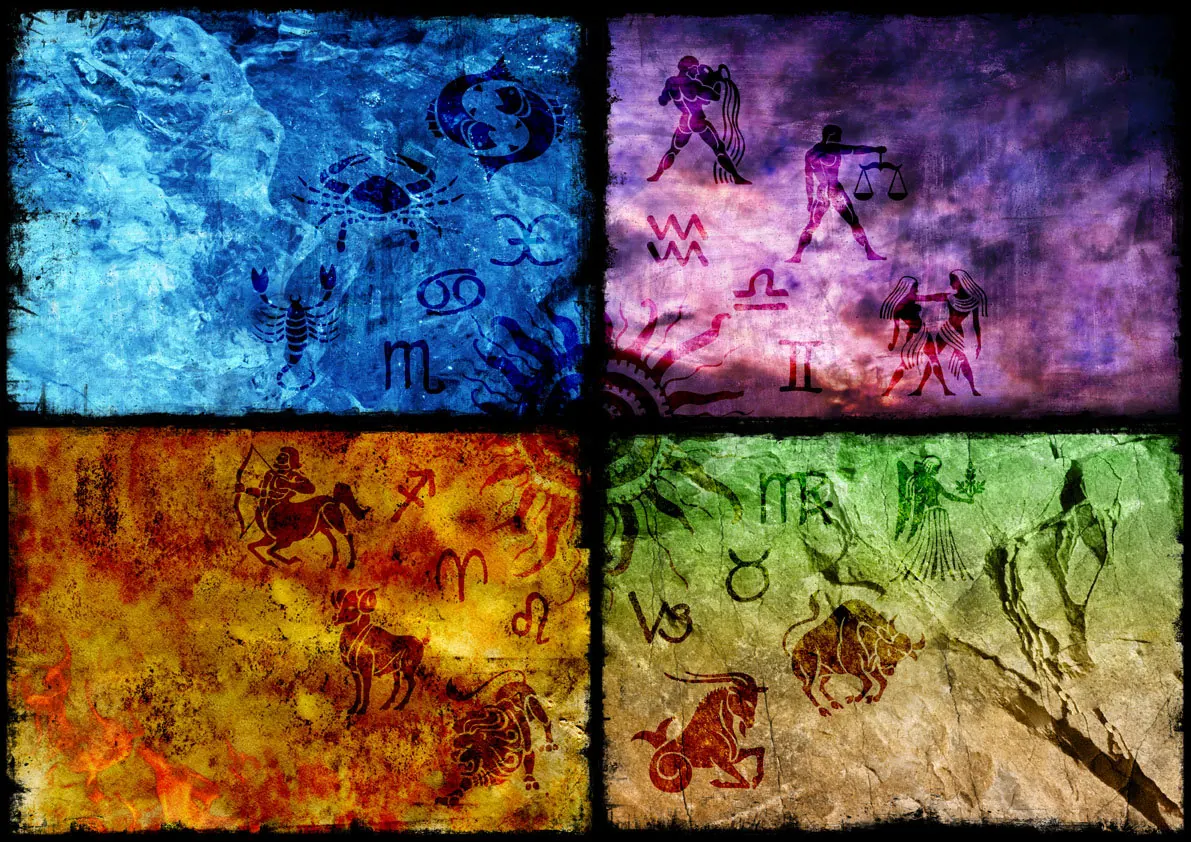
In my practice, I have noticed a certain disagreement about the predictive scope of astrology as an art, expressed chiefly in the conflicting attitudes people hold towards the concept of fate. Some believe that astrology can indeed predict future events because they accept that fate exists. Even among those who are sceptical on this point, astrology may be said to command the greatest credibility on account of its presumed scientific basis—or rather, their perception of that basis. We explored this in an earlier article, The Question of Fate in Astrology, which explains the concept and addresses the question of why astrology works. Those who do not believe in fate, on the other hand, begin with the assumption that life is inherently unpredictable. They emphasise that this unpredictability is one of life's essential beauties, and that fate is incompatible with freedom—a relationship we have already examined in the article mentioned above. In a sense, both approaches have their validity, rooted in the very idea of Life, or Nature. In Nature, everything is indeed possible: nothing can be excluded or constrained except by the nature of living beings themselves. Yet that very nature also imposes limits, for a being can develop only in accordance with its own nature. The same is true of human beings, whether or not we accept this predictability in ourselves. Thus, while the extent to which our development can be predicted may be disputed, the possibility of knowing it cannot. This does not mean, of course, that development follows a single course, with the same limits of attainment prescribed for everyone. On the contrary, individual offshoots always differ, and that diversity should find expression at every level. This individual foundation is one of the central premises of astrology as a Hermetic discipline. The possibility of knowing our individual development therefore arises from our very nature. Astrology is a language that can give us access to that knowledge, and this is the source of its predictive power. Perhaps no one expressed this more beautifully than the Swiss psychologist Carl Gustav Jung:
“We are born at a given moment, in a given place and, like vintage years of wine, we have the qualities of the year and of the season of which we are born. Astrology does not lay claim to anything more.”
This is so because Nature shapes us through these qualities, a process most readily explained by the humoral theory of medicine. Humoral medicine (or humoral theory or pathology) developed in antiquity and held that the human body consists of four fundamental bodily fluids (humours). Traditionally, these were blood, phlegm, black bile and yellow bile. According to this theory, illness arose from an imbalance among the humours, and treatment had to restore their equilibrium. The theory was first proposed by the Greek physician and philosopher Empedocles in the second half of the fifth century BC, on the basis of the doctrine that all things are composed of four fundamental elements. It was adopted by Hippocrates and later systematised by Galen, before passing through medieval Arab physicians to their European counterparts. The relative proportions of these four humours in turn establish a person's temperament. Depending on which humour predominates in the bodily constitution, this may be choleric (yellow bile)—fire; melancholic (black bile)—earth; sanguine (blood)—air; or phlegmatic (phlegm)—water. Temperament is rarely so pure: it is usually a mixture of all four, although one generally stands out as dominant. What matters here is that temperament is a largely innate feature of the personality, determined by the biochemical characteristics of the limbic and central nervous systems. For this reason, assessing temperament is the starting point for analysing a natal chart, as you can read in greater detail in How (Not) to Interpret a Natal Chart. Temperament is also regarded as the only unchanging constant: it is the subtle fabric, the very foundation upon which character is subsequently built. It colours all a person's experiences, and their character traits develop accordingly. The concept of fate fits into this picture too, since it is intimately connected with individual character. Another ancient philosopher, Heraclitus of Ephesus, recognised this:
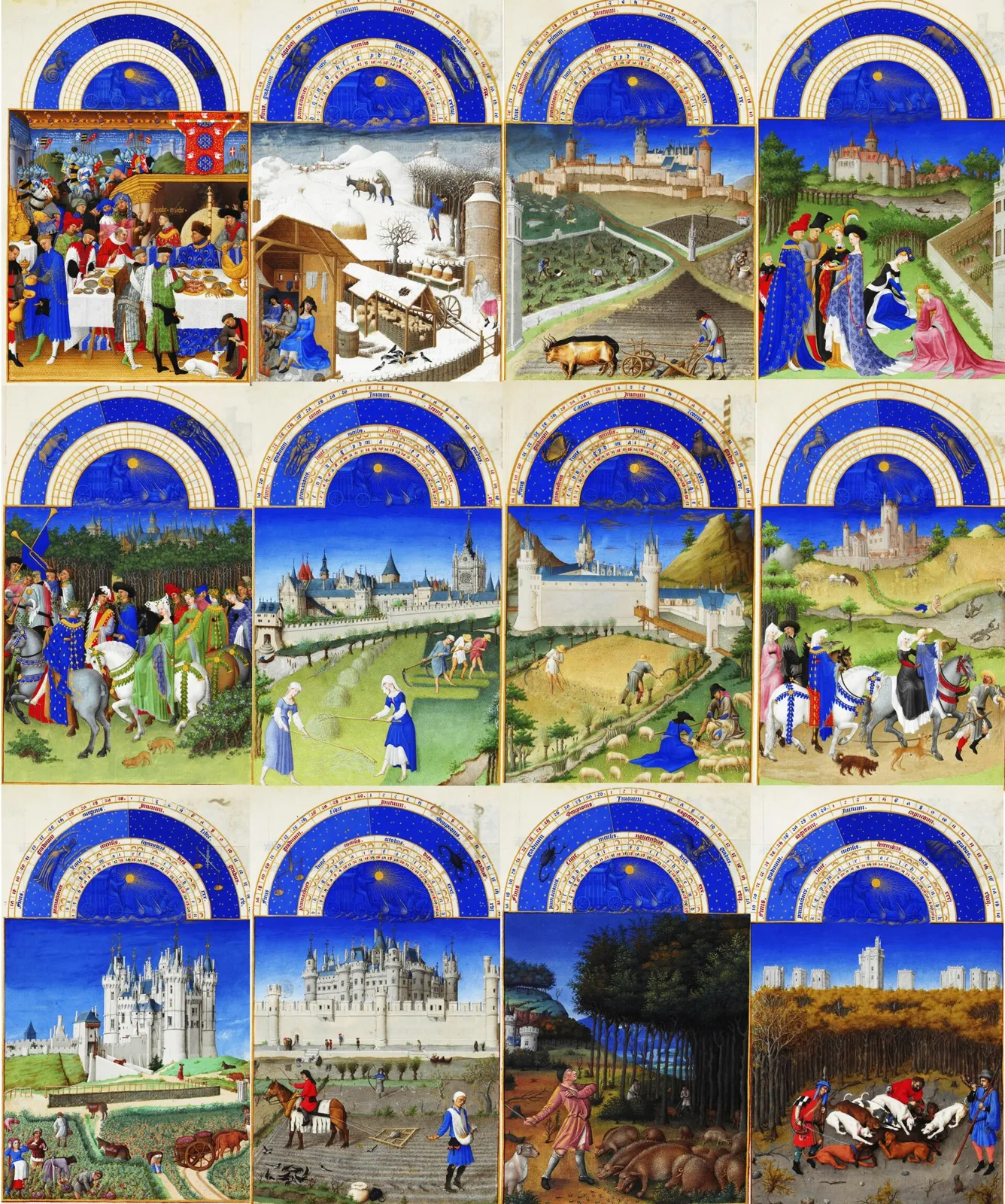
“Everyone chooses—thinks, acts, embraces—what accords with their nature, that is, their character (spirit). Thus some are ‘awake’ (rational), while most are ‘sleepers’, and their souls are largely ‘moist’: limited, governed by the senses and irrational.”
We can also see a connection between this proposition and the modern theory of the “law of attraction”, and the notion that “your life is what your thoughts make it”. This would clearly suggest that our thoughts and actions are, after all, conditioned by our nature. Or, as Jesus says of prayer in the Sermon on the Mount, “… your Father knoweth what things ye have need of, before ye ask him.”
As a symbolic language, astrology holds all this information primarily in the natal chart. It assesses temperament by examining the Ascendant, the Sun, the Moon and, indeed, the Lord of the Geniture. The Sun's position is particularly interesting in this respect, since it is considered not by zodiacal sign but by season—a direct connection with Jung's observation that “… we have the qualities of the season of which we are born.” The Ascendant, or rising sign—the horoscope in the original sense—is the sign rising on the horizon at the moment of birth. It has particular significance because it impresses its symbolic qualities upon the native's nature. The importance of the other luminary, the Moon, is especially apparent even at the bodily level, since science too has unequivocally established the influence of its phases on life on Earth. This influence is clearly expressed in the native's temperament. Here, the lunar phases are considered in terms of the fundamental qualities of heat, dryness, moisture and cold, whose combinations produce the temperaments—for example, the choleric temperament is hot and dry—and which have been observed to predominate at particular phases. Thus, from the new Moon to the first quarter, the qualities are hot and moist (sanguine); from the first quarter to the full Moon, hot and dry (choleric); from the full Moon to the last quarter, cold and dry (melancholic); and from the last quarter to the new Moon, cold and moist (phlegmatic).
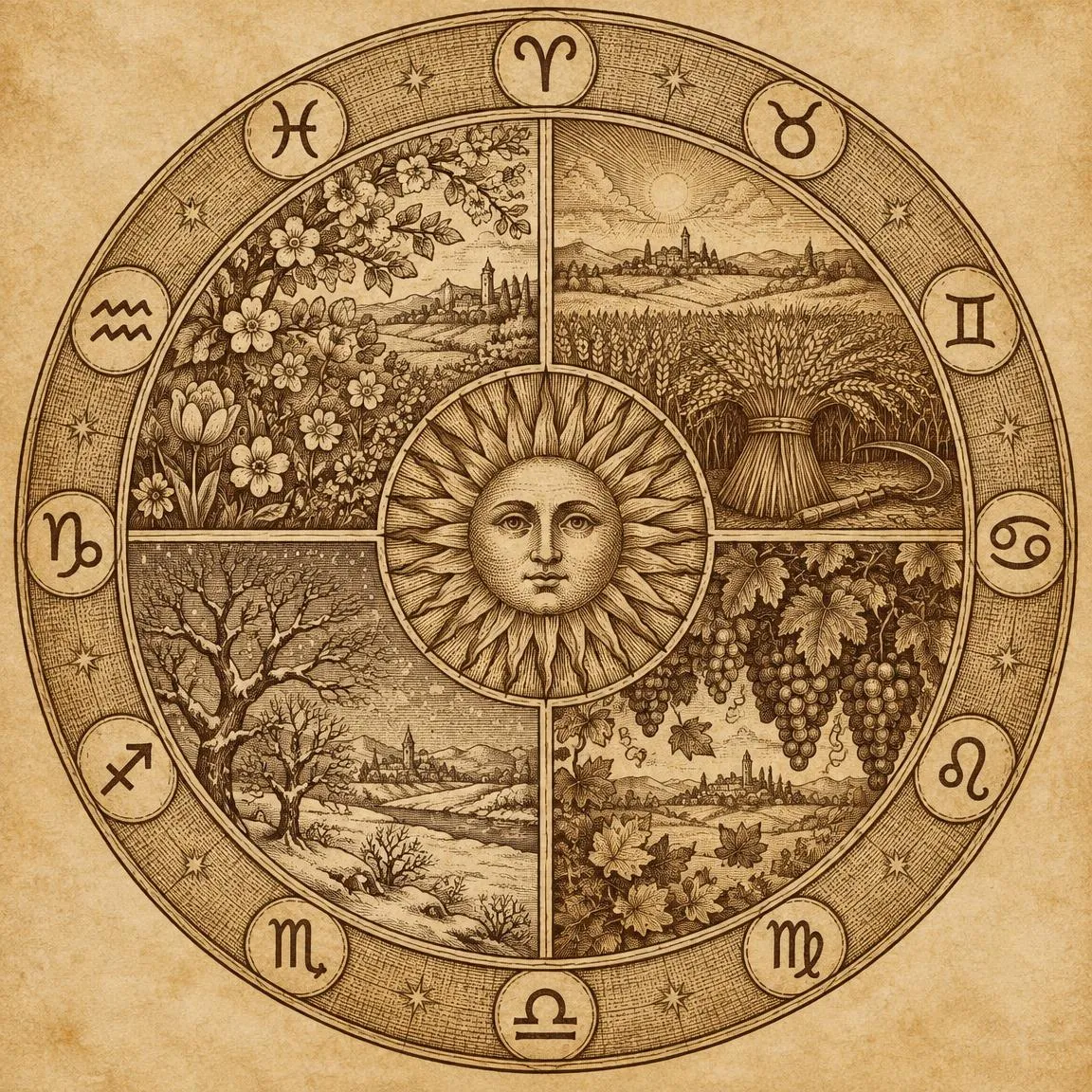
What makes the natal chart the most suitable means of interpreting this predictability—of knowing someone's nature and, consequently, their fate—is that all of this is expressed through a distinctive language of symbols and their relationships. A symbol is, in a sense, a wordless language: it distils different concepts into a union of intuitive insight and logical understanding, and as such is an expression of Knowledge. By contemplating a particular symbol, we can arrive at a much deeper and, more importantly, more complete understanding of everything woven into it than we could by reading volumes on the subject or relying on intuition alone. The symbol unites these two ways of knowing, giving us insight into the Truth it represents without reducing it to something relative. Surely you have often felt how the agreement between an inner voice and logical reasoning produces that unmistakable sense of knowing which makes you exclaim with delight, “I knew it!” A symbol embodies precisely this union. Herein lies the power of symbols: they transcend words and feelings, distilling them into a single synthesis of Knowledge. This is also why the highest Mysteries of human existence have been transmitted through symbols.
“And he said, Unto you it is given to know the mysteries of the kingdom of God: but to others in parables; that seeing they might not see, and hearing they might not understand.” (Gospel of Luke, 8:10)
In this sense, symbols may be regarded as the language of Nature and her purpose, understood philosophically. Astrology has achieved just such a distillation, as we shall see in examples later in this article. Yet the principle is perhaps most clearly expressed in Jung's hypothetical construct of the archetype: the universal, inherited framework of all experience. Archetypes are innate patterns of thought, feeling and action, formed from the experience of countless generations of ancestors accumulated over centuries. In a broader sense, an archetype is an original model, a prototype, a primordial pattern or type. It is the fundamental structural and dynamic unit of the collective unconscious. It can be studied through its collective manifestations—in mythical imagery, religious dogma, poetic imagery, rituals and so forth—and its individual manifestations, in dreams, visions, symptoms and parapsychological experiences. Its expression, however, is always symbolic: an allegorical representation of a particular aspect of Truth. Take the cross, for example. Its most immediate and familiar association is with sacrifice, and it is also an unmistakable symbol of Christianity, whose paradigm rests upon sacrifice itself.
Astrology works on precisely this principle. It considers the symbols of the planets, zodiacal signs and other astrological factors as representations of particular aspects of Knowledge and of Nature's purpose. These find expression in the personal microcosm described by their unique relationships within our own “patch of sky”. This is made possible by, and follows from, the natural, Hermetic teaching “as above, so below”. It is important to stress that, when I speak of Nature's purpose, I do not mean a master plan devised and fixed in advance, which can unfold in only one way and admits no alternative. Rather, this purpose is continually evolving, somehow unfolding of its own accord, and all we can really do is recognise the symbolic constants in that unfolding. At the individual level, this is evident in the fact that our natural potential may or may not be developed. Much the same can be said even of the course of civilisations through Time, which we shall explore in the next article.
But let us return to the symbols in the natal chart. As an example, I would like to single out two planets that I consider genuinely transcendent: Venus and Mars, rather than those other planets favoured without foundation by modern astrology. Love and partnership will no doubt spring immediately to mind. These are only part of their broader symbolism, but their transcendent nature does, of course, have clear implications in this sphere. After all, is it not in our loving relationships that we are most strongly called upon to transcend the ego?
Venus and Mars invite us to this transcendence in different ways. Astrology understands the principle of Mars in terms of right action: action which, in an abstract sense, goes beyond the demands of the ego, regardless of what our personal views tell us is right or wrong, or whether our ego considers it wise. Traditionally, there are two places where Mars leads us to transcend ourselves. One is the battlefield, where you do something your ego does not want you to do at all: you sacrifice yourself through right action. The other place where you sacrifice yourself through right action, putting the ego at risk, is the bed. This is why orgasm is called the “little death”. For when you transcend your ego, the ego resists: it does not want you to give so much of yourself. Ultimately, whether you are male or female, the impulse of Mars within you seeks to transcend the ego, because it is then that you can find beauty.
If Mars seeks to transcend the ego through right action, Venus seeks to do so through sacrifice of another kind: giving beyond the ego's demands. What do you do when your Venus connects with someone? You begin buying gifts. Your ego does not want that; it wants gifts for itself. Or you spend time cooking for the other person, when your ego is not especially concerned about what they will eat! And when your Venus becomes deeply attached, you transcend your whole life by wrapping it into a neat little ball and offering it to another person, saying, “Look, do you want this? Will you marry me?” This principle of giving arises from the related longing for union, itself clearly a symbolic expression of Venus. At the deepest level, Venus seeks to unite us with God—hence the depiction of the Holy Spirit in traditional iconography as a dove, a bird ruled by Venus—while in synastry this longing finds expression in the desire to unite with another person. Interestingly, the glyph of Venus contains the symbol of the cross discussed earlier.
Taken together, these examples of Venus and Mars as symbolic expressions of our need for transcendence show just how many levels of astrological symbolism we can explore, and what insights it can offer into ourselves, our nature and, consequently, our fate. For fate is simply the sum of the experiences arising from these needs: the unfolding of our nature through those experiences, ultimately leading us, perhaps, to Wisdom and the development of our potential—or to a failure that Nature will discard. We are often able to recognise such patterns and, through them, come to know ourselves. This is further testimony to the validity of the symbolic portrait contained in our personal cosmogram.