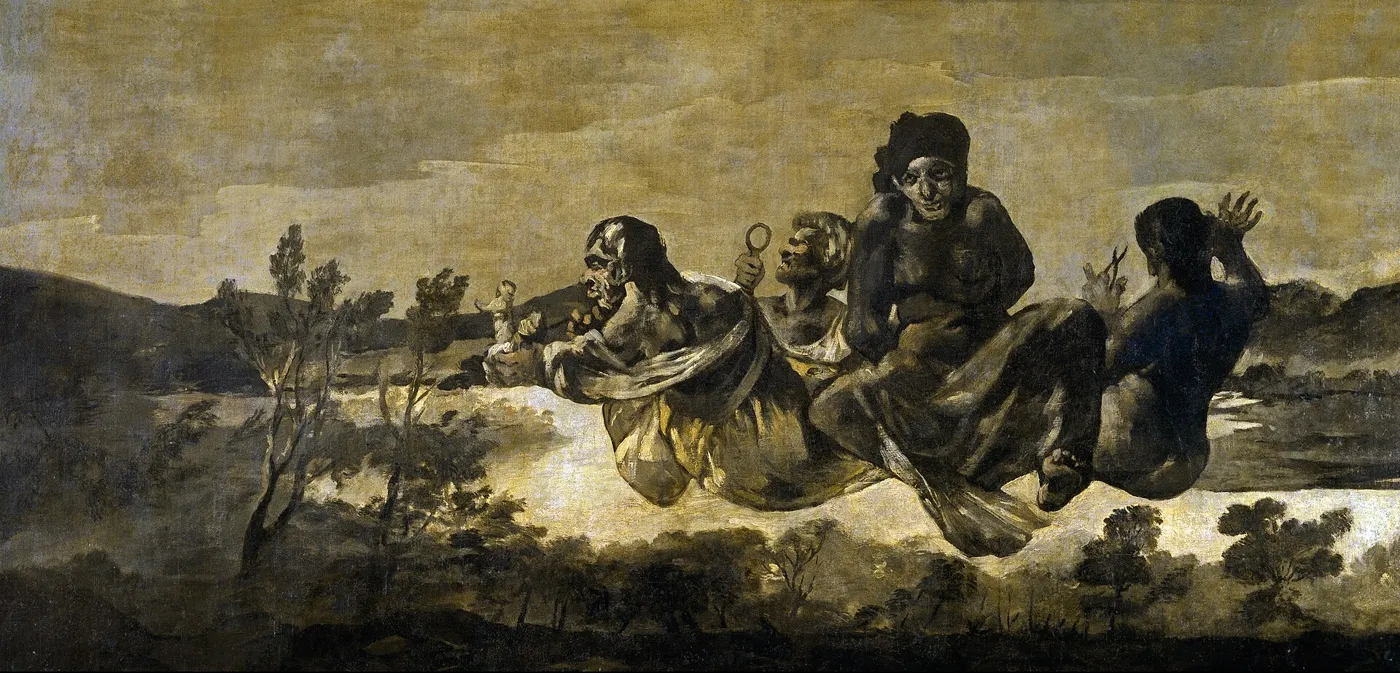
In my practice, I have very often found that people who request a natal chart reading have certain reservations about its deterministic implications. Although they want a reliable account of the most important events in their lives, they nevertheless often find it difficult to confront such a reading. The question that usually follows is: “But it doesn’t necessarily have to be that way, does it?” Given the understanding of human nature we shall explore here, this is hardly surprising. Many astrologers, too, insist that the natal chart is merely a set of potentials. Yet even if we accept this position, we find that these “potential events” do indeed manifest as realities in people’s lives. The most likely reason lies in the fact that we inhabit a causal universe, and that our existence is conditioned by numerous causes of which we are usually unaware. These, in turn, allow life to “unfold” according to a pattern encoded in the natal chart. This is precisely what astrology is fundamentally concerned with, and why it is bound up with the concept of fate that follows from it. That concept is the subject of this article.
Fate, and the question of whether it exists, is as old as the question of God, since the existing or manifested (causal) universe has always been understood as subject to divine will. Numerous theories and paradigms have arisen from this initial premise, seeking, more or less, to describe that relationship and the way in which this “God” orders things and events, naturally defining humanity’s place within that order.
For the purposes of this article, which seeks neither to define God nor to explain what fate is, but rather to present them from the perspective of astrology as a Hermetic art, God should be understood in Spinoza’s sense: a God wholly equivalent to nature, encompassing all that exists, who “does not play dice with the Universe”, as Einstein put it. By this he meant that everything that happens, without exception, happens according to the strict laws of nature. Astrology lays claim to nothing beyond this natural order, which belongs to every living being on the planet and is imprinted within it. This is also evident in the traditional doctrine of temperament—the balance of humours in the body—which provides the initial conditioning premise whose nature determines the individual’s subsequent development. It was in this sense that we discussed the assessment of temperament as the foundation of sound natal analysis in the earlier article How (Not) to Interpret a Natal Chart. There, we can see how the interpretation develops from this foundation, amounting to nothing other than a reading of the “unfolding” of that individual nature through the experiences of life. This is because the humours (elements) express their symbolism at every astrological level: from temperament in its psychological and bodily dimensions, through the essential and accidental nature of the planets and the essential humoral nature of the zodiacal signs, to the seasons and their corresponding quadrants of the horoscope. The assessment of temperament is, in fact, an insight into the individual’s physis, which we may describe as an amalgam of all the circumstances into which a person is born. Understood in this way, it encompasses the influence of environment, climate, the traditional elements and their associated qualities, and all the circumstances belonging to the sublunary world, extending to stellar “influence”. All these connections are mystical, and perhaps find their best expression in the Hermetic truth: “That which is below is like that which is above, and that which is above is like that which is below, to accomplish the miracles of the One Thing.”
Indeed, within astrology’s doctrinal foundations, the Stoic teaching on the unity of the universe is particularly important to this subject. At its heart lies the idea of the unity of nature and the universe. This unity is neither purely material nor purely spiritual, for the Stoics believed that spirit and matter were made of the same substance, and that everything was therefore subject to the same law, which they called “Fate”. These ideas differ considerably from Aristotle’s, although both the Stoics and Aristotle accepted the philosophy of elements and opposites. The differences chiefly concern Aristotle’s conviction that there were two kinds of physics: one for the sublunary world and another for the superlunary world. The Stoics recognised only one universal law connecting all that exists. For this reason, their doctrine of the unity of the universe became the basis for explaining the relationship between the visible heavens and the Earth that we now call synchronicity. The essence of this synchronistic connection lies in the simultaneous changes and cycles unfolding in the heavens, through planetary motions, and within the human being; it excludes a relationship of cause and effect between the heavens and humanity. The planets and the celestial sphere therefore move in parallel with our inner development. In this sense, it is incorrect to say that “the stars exert an influence” upon us and determine our fate through that influence. The stars are merely indicators and, in themselves, cause nothing. For all these reasons, the astrological relationship between heaven and Earth cannot be characterised as one of cause and effect, as it so often is today, but as symbolic and mystical, as it was understood for thousands of years.
According to this pattern, the native lives out their life story, the whole of which is present in the natal chart for anyone to read—provided they know how. I do not know why this should be so, but experience obliges me to accept without reservation that the fate of each of us is recorded in our natal chart. This is what astrology does: it gives us a means of knowing our fate, our own personal “constellation”.
This personal “constellation” somehow resides within us, working from the inside out. It is an invisible network, or interweaving of aspects of our being, represented by the disposition or arrangement of the planets, stars and luminaries—the Sun and Moon—in the zodiacal signs at the time of birth. At the same time, it interacts with the outer heavens, so that the external and the internal are connected within each of us. Paracelsus also recognised this when he spoke of the “heaven of the microcosm” and the “heaven of the macrocosm”. We can witness this interaction through predictive techniques, although a causal explanation always eludes us. Yet this must be so, for we are dealing with an interaction between the acausal and the causal, between the “material” and the “divine” human being, which evidently operates according to laws other than those established by modern science. Astrology will therefore always remain an occult art, because what makes it “work”—the reasons behind astrological influence—will forever remain a secret and a mystery. Those who seek to prove it, especially in the terms of contemporary science, and thereby “reform” it, would do well to abandon that futile endeavour.
The practice of authentic astrological delineation, together with the thoughtful application of predictive techniques, removes all doubt on this point. It becomes clear that the Gnostics and mystics were right: this constellation of ours is also a kind of spiritual prison, and natal astrology is merely a plan of one floor of that prison. Spiritually, all you can hope to gain from such a plan is instruction and guidance towards the exits, and the like. Astrology alone will not free you from that prison. This is where spirituality, religion and philosophy, together with their practices, enter the picture.
What astrology can do is describe in advance the characteristics of our embodied lives. A proper interpretation of the natal chart portrays our objective reality. It answers questions such as: “Will I marry?”; “Will I have children?”; “What profession will I pursue?”; “What will my finances be like this year?”; “What will my health be like?”; “Will I go to prison?”; and so on.
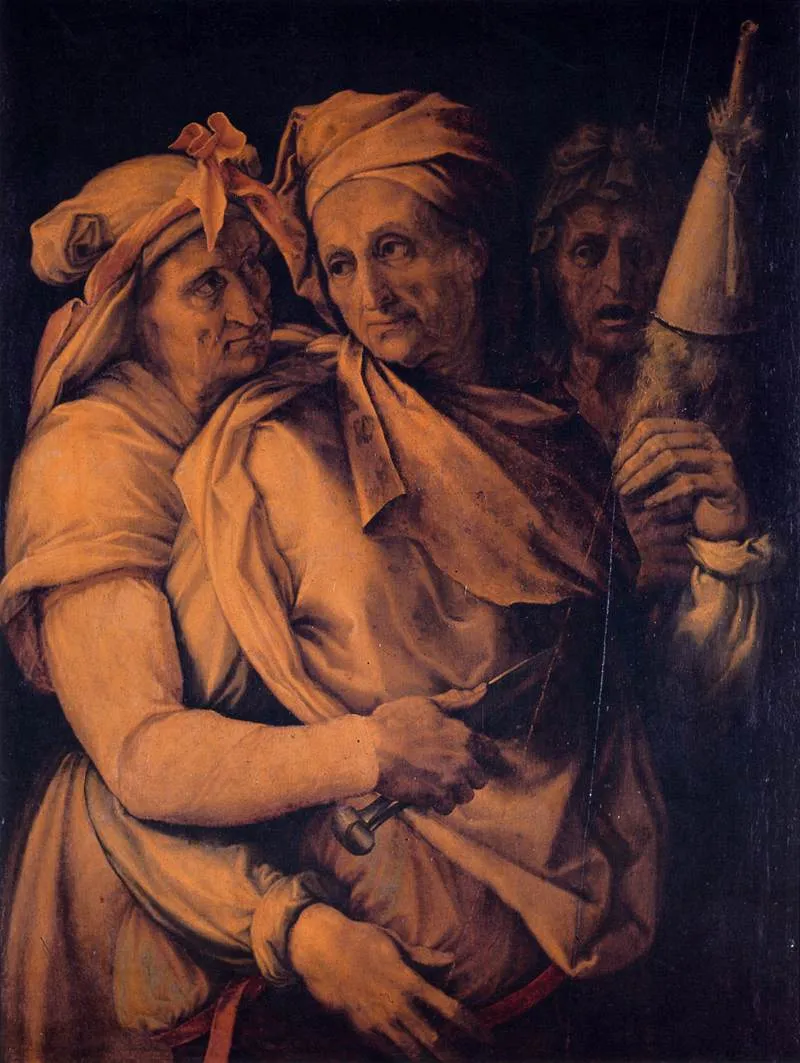
Natal astrology has traditionally been used in three ways: to describe in advance the events that will unfold in our lives, to attempt to manipulate the reality we inhabit, and to explain the hidden spiritual causes behind the phenomena of our lives. For the task of astrology as a Gnostic art is not merely to ease everyday existence and “solve” human problems by answering such questions. Above all, it is to identify the individual’s potential for “deification” and strengthen it through its forms of intervention.
Two things are needed to establish that predestination or fate exists in our lives: objective, impartial observation of events and human behaviour over a sufficiently long period, and the delineation of natal charts together with predictive astrological techniques. The first requires sustained attention, which not everyone possesses, but which can be developed through practice. The second provides a structure and a language that allow us to see and speak about fate.
To see how “fate works”, we must first understand who the person in question is. The contingencies or circumstances of the native’s life are what distinguish them from other people, and the natal chart is a diagram of those contingencies. It tells us what is promised at birth and what is possible—the “what awaits us” part—while predictive techniques allow us to witness the periodic and occasional manifestations of the events shown in the natal chart, thus supplying the “when” of the interpretation.
Once you see things from this perspective, once you recognise the seemingly unceasing repetition of natal patterns in the events of the lives of those around you, there is no longer any doubt that fate exists. Yet the same path also brings the realisation that the fated dimension of human existence is not the whole story.
This leads us to understand that Wisdom alone holds the key to the dungeon in which fate confines us. Through Wisdom, the wise can escape the horoscope and the dominion of fate. Yet they must still confront the facts of their physical existence. The body remains subject to the rule of the stars. In attaining Wisdom, however, they also attain freedom. They know that they are not those bodies, and that what they truly are is neither determined by fate nor capable of falling under its dominion. The Hermetic teachings are quite explicit on this point when they speak of Man as a twofold being. His material part is ruled by fate. His divine part is free. Whoever seeks freedom from fate must cultivate the latter. This is the essence of Hermetic wisdom. Nevertheless, when we speak of the material and divine parts of the human being, I believe they should be understood here in terms of consciousness. It is worth distinguishing between material, conditioned (causal) consciousness and the consciousness that transcends it: acausal and unconditioned by space and time. Its attainment begins with Wisdom, and, as such, necessarily lies beyond the confines of the natal chart; hence its frequent identification with the idea of enlightenment.
These teachings, contained in the first book of the Corpus Hermeticum, known as Poimandres or Pimander, speak of this twofold human nature. Man is subject to fate insofar as, and for as long as, he is mortal, yet he is also exalted above the heavens, ever-conscious and immortal as the “Man of Eternal Substance”. The realisation of this “Man of Eternal Substance” within us is the subject of the subsequent books of the Corpus Hermeticum and has always been a principal concern of esoteric philosophies. This “godlike” and “immortal” being that exists within us, according to the teachings of many spiritual and religious philosophies, somehow always remains merely an idea or a thought—if there is any awareness of it at all. To make it real, certain things must be done that lie outside everyday routine. Traditionally, this process of realising the being is called “deification” and represents the reunion of the original elements of the Soul. The process is exceedingly difficult, but we should remember that it, too, manifests under the guise of what we recognise as fate. From this we should understand that even fate itself is merely an instrument in that Process, albeit one with a vital role, since it opens the way to wisdom through the experiences of life.
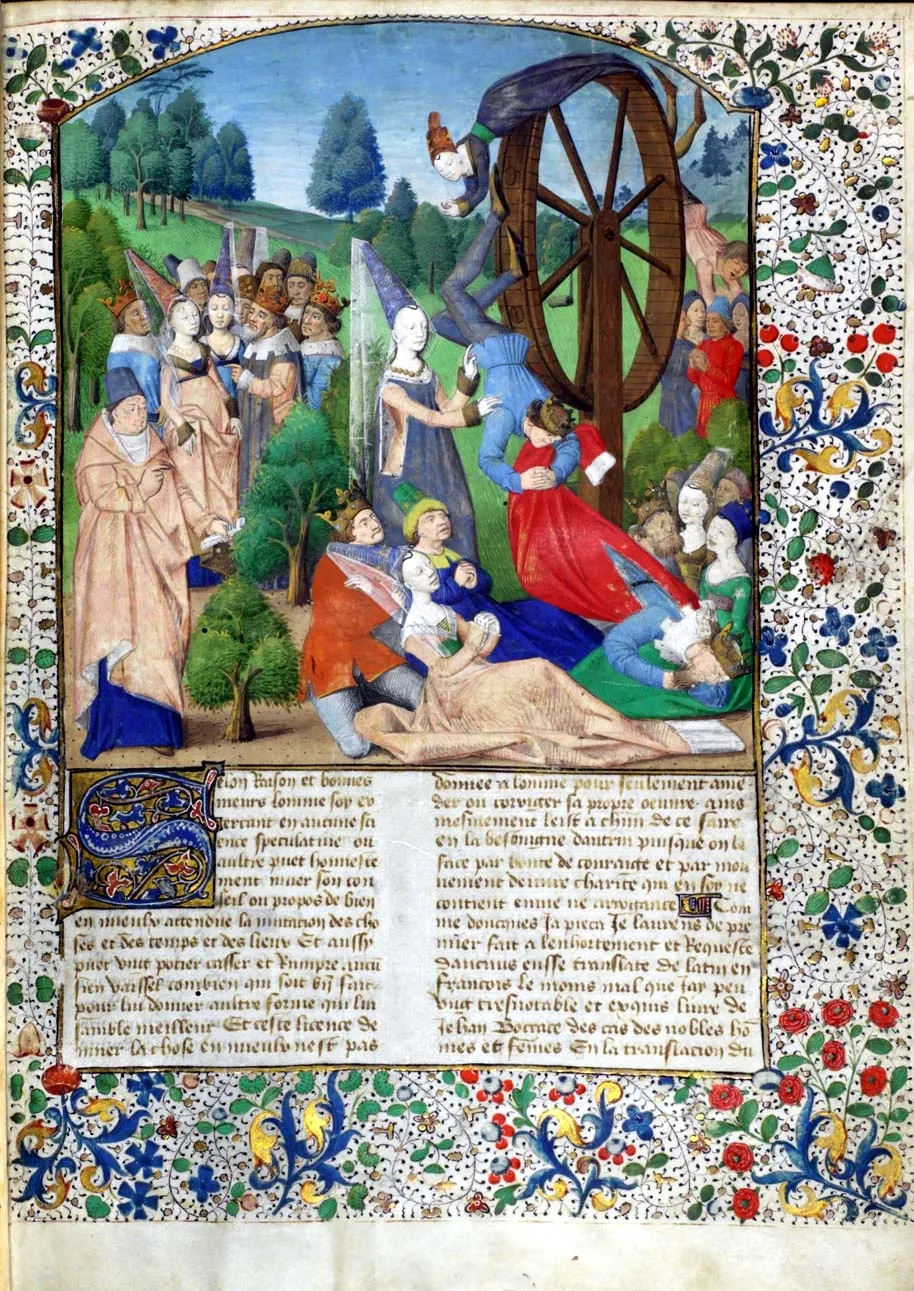
Again, these questions belong to metaphysics, not astrology. There are disciplines—certain forms of yoga or spiritual practice, for example—that can lead towards this goal. Yet the attainment discussed here requires more than the mere performance of their practices: it presupposes a “prior path” of renunciation and suffering. Although these matters are of fundamental importance, they are not astrology. Astrology is primarily concerned with embodied existence. It therefore gives us an incomplete picture of the human being, and although it can offer indications and guidance towards attaining what the Picatrix calls the “Perfect Nature”, it cannot bring us to that attainment. This is probably why it has been designated a “Lesser Mystery”. It is lesser because it is confined to a lower level of transcendent reality. This is, indeed, its place among the Hermetic arts: astrology is a philosophical (metaphysical) discipline concerned with the relationship between the human being and that part of the cosmic axis which, so to speak, belongs to humanity. This encompasses the world of the four elements and the subtle world of the planets, while the symbolic circle at the summit—transcendence—is neither an object of astrological investigation nor a domain of astrological practice.
It is clear, then, that sound and precise astrological interpretations, borne out by actual events, validate the concept of fate as presented here. Any errors that occur can never be laid at the door of the Art, but must be attributed to the shortcomings of the artist, as William Lilly observed.
What is crucial, however, to a practical understanding of fate from an astrological perspective is that fate prevents us from stepping outside a given framework, while allowing movement within it. In practice, this means that a single planetary factor may manifest in dozens of different ways in a person’s life, but cannot become something else: a different ontological factor, a better-integrated factor, or the like. In other words, your natal retrograde Mercury or combust Mars is what has “fallen to your lot”. It may carry many meanings and express itself in different ways, but it cannot become something other than itself.
Of course, fate is a subject that could be discussed indefinitely, and further exploration would exceed the scope of this article, whose chief purpose is to present some of the key philosophical and other principles upon which its astrological interpretation rests. Nevertheless, true understanding lies in the mystical language of astrological symbolism, which offers direct insight into fate and leaves the sincere, dedicated seeker little room for speculation on the matter.
- This article draws on excerpts from Robert Zoller’s “Diploma in Medieval Astrology” course and relevant discussions on the traditional astrology forum link