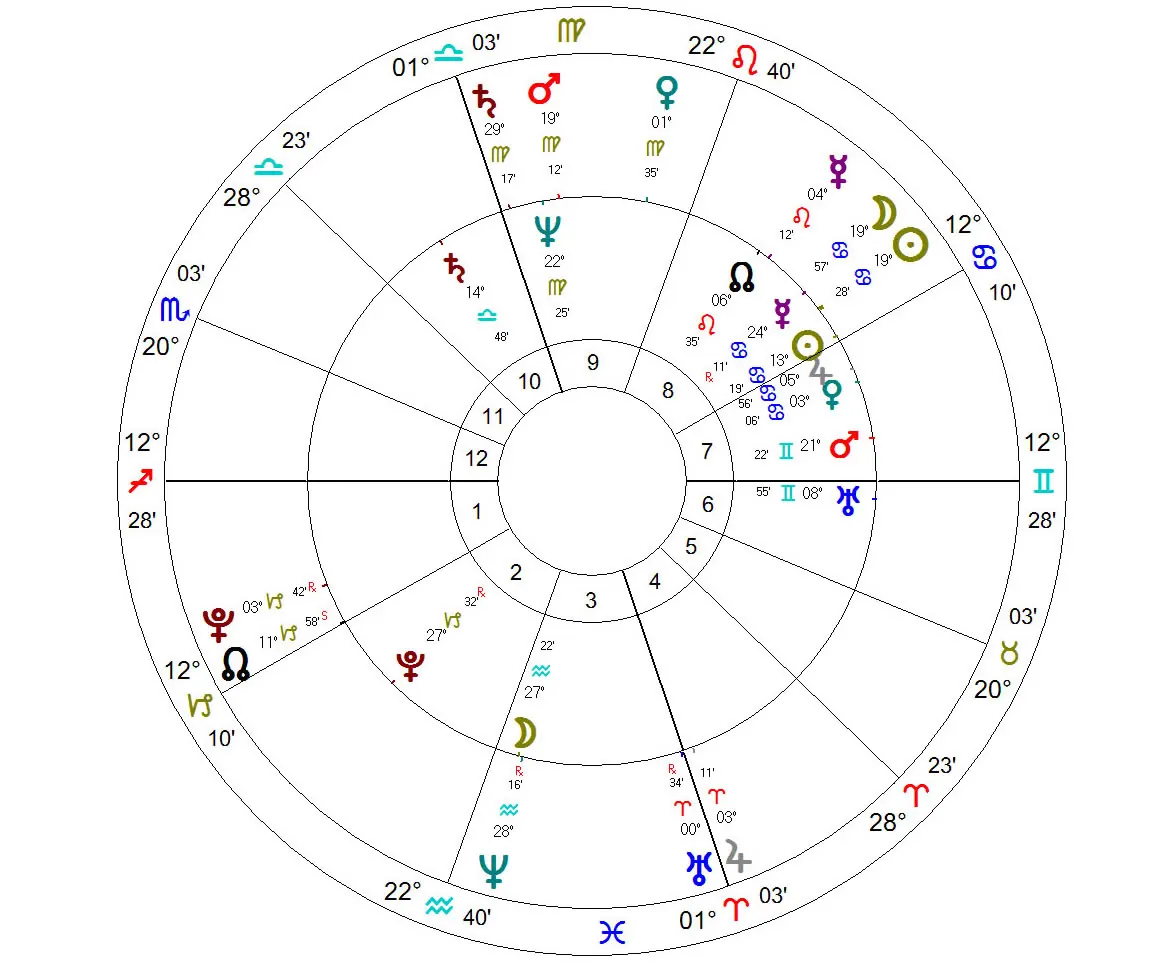
Astrological symbolism is truly inexhaustible. Even a single planet’s placement in a sign can yield so many descriptions. These can often sound contradictory, and therefore confusing. Yet this is only the beginning: once we start considering a particular area of life in a natal chart, such as love and marriage, we weave a web in which even astrologers themselves often become entangled. This happens because so many other factors must be considered: in this example, the seventh house, any planets within it, its ruler, the triplicity rulers, aspects to them, and so on. When all these factors are considered in isolation, the result is general confusion. Some astrologers, for instance, hold that Aries on the seventh-house cusp brings an early marriage. But what if Saturn is also there, potentially indicating the very opposite? In my view, the fundamental problem lies in the approach to interpretation itself. First of all, we have far too many formulaic interpretations, assembled simply by combining the meanings associated with the planetary placement under consideration. Many people with Jupiter in the second house, for example, are not particularly wealthy; the Sun in the tenth has not necessarily secured them a position of standing, nor has the Moon in Scorpio brought every one of them into the world through a difficult birth. Although these astrological descriptions are largely sound, they are not, and cannot be, sufficient in themselves. All this brings us to a second problem: the attempt to make astrology more appealing to the masses debases it, reducing it to mere entertainment, as is so often the case with contemporary culture in general. The very premise of mass appeal excludes the starting point of natal interpretation: individuality. This is problematic because interpretations are made almost entirely on the basis of these stock descriptions. You are a Leo, so your pride and ego cause you problems; you like to be indulged and to be the centre of attention. Yet how many people you know have surprised you by telling you they were born with the Sun in Leo?
On the other hand, in this age of spectacle and the glorification of isolation, interpretations often play to a sense of being special, presenting certain astrological factors as signs of that specialness. The Sun on Regulus: you will be a king! This also answers a need in clients themselves, who simply ask the astrologer to embellish the rosy picture they have of themselves. The fact is, however, that the great majority of natal charts offer nothing exceptional, since most people do, in reality, lead lives of greater or lesser ordinariness. By turning astrology into a spectacle and adapting it to the demands of the masses, many astrologers have done it a grave disservice. In the process, numerous rules and even techniques have been altered. One example is primary directions, a technique which traditionally involves far more rigorous calculation than the simplified version that merely advances every astrological factor by one degree for each year. Yet although these are all serious offences against the Art, the greatest is the gradual loss of skill: the defining quality that distinguishes an astrologer from those who merely call themselves one. Anyone can memorise all the descriptions mentioned above, but only skill allows them to be placed in the appropriate context and yield a sound interpretation.
To arrive at that context, we must change our starting point—the foundation of our interpretation. In natal astrology, that foundation is the individual. No, it is not a Taurus who comes to us for a consultation, nor a Moon in Cancer or a Gemini Ascendant, but a particular person. This shift in the starting point, from the particular to some general abstraction, is a trend found in many fields today; it is simply the prevailing pattern of thought. Perhaps it is most obvious in medicine, which today treats diseases rather than individual people. In antiquity, the approach was quite different. The individual, their temperament and their distinctive characteristics were considered, making it possible to find a remedy for the cause, suited to that particular person. Perhaps this is the very truth Hippocrates concealed in his statement that a physician who does not know astrology cannot be called a physician. Much the same applies to astrology. The point is that when we work with a personal horoscope, it is tailored specifically to us, and the answers and suggestions it offers will likewise be tailored to us.
Let us now turn to the context mentioned above, which provides a framework for all this symbolism—or, perhaps better still, a filter through which we can identify what specifically relates to the life of the client in question. Before considering the astrological factors themselves, we need to establish certain other facts. The easiest way to obtain these is from the client. The notion that you should tell an astrologer nothing about your life and expect them to guess it all is entirely unhelpful. To return to the medical analogy, would you expect a doctor simply to guess what was wrong with you without first telling them anything about your symptoms? In this symptomatic sense, that is, to some extent, the purpose of natal astrology: to help you understand recurring patterns in your life, whether these concern illness, for instance, or why you keep choosing unsuitable partners, and so forth. Giving the astrologer some details of your past provides valuable information that narrows the frame of reference and makes further interpretation possible. The next non-astrological factor that must always be taken into account is the person’s background, social standing and so on. This is simply because the range of ways in which natal potential can manifest is quite different for, say, a member of a wealthy family and someone of lower social standing. The place and environment in which someone is born also play a major role, since the general takes precedence over the particular. A person born in Somalia with an absolutely splendid Jupiter in their natal chart is unlikely to attain the wealth such a Jupiter might promise—and might indeed bring to someone born in circumstances far more favourable to it. Family background and heritage also play a very significant role, precisely because they narrow the context. In deeply traditional families, certain possibilities will simply be closed to a child born into them. Furthermore, in astrological terms, certain factors inherently take precedence over individual fate, and mundane astrology can provide answers here. Thus Claudius Ptolemy, writing in the second century, states in the introduction to Book II of the Tetrabiblos:
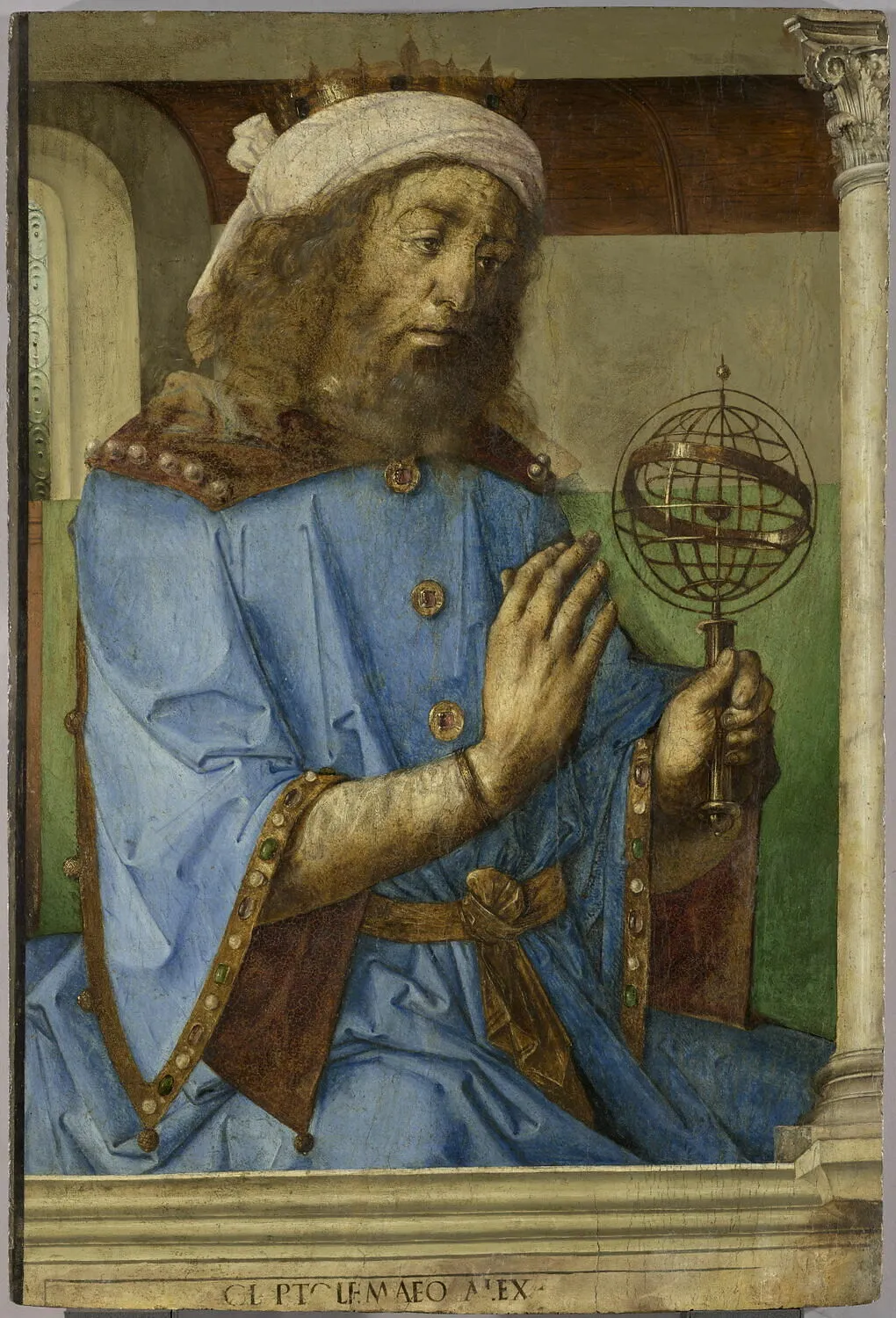
Prognostication by means of astronomy is divided into two great and principal parts. The first and more universal concerns entire races or peoples, countries and cities, and is called general, dealing with wars, pestilences, famines, earthquakes and floods; the second and more particular concerns individual lives and is called genethlialogical. In accordance with this division, we must first consider the principles of general, or mundane, astrology, since these rest upon greater and more powerful causes than do particular events. For weaker natures always yield to the stronger, and the particular is comprehended within the general; it is therefore necessary that those who intend to inquire into individual destiny should first understand the general considerations.
In this sense, if mundane cycles indicate catastrophes such as wars in particular countries or regions, individual horoscopes cannot fulfil their promises: they simply lack the ground in which all those possibilities might come to fruition. Especially revealing in this respect are the great conjunctions of the chronocrators, or certain correspondences with prenatal ingress charts, discussed in greater detail in the article on the Classical Astrology blog. Such indications explain why certain significant configurations bring some people the highest achievements they theoretically promise, while the same configurations bring others nothing beyond the bounds of an ordinary life.
As we narrow our focus further, only now do we arrive at the natal chart itself. Here, the foundation is provided by an analysis of temperament, which further defines the framework within which the natal indications will manifest. In this respect, no two conjunctions of, say, the Sun and Mars are alike, because they will not express themselves in the same way. Although there are only four temperaments, none will, of course, appear in its pure form; most often, we find a mixture of all four. Nevertheless, one will almost certainly predominate over the other three. Temperament reveals how we behave, how we go about our work and how we approach life. All this gives us an important picture of how particular potentials in the natal chart will find expression, as well as the manner in which certain achievements will be attained. The implications of temperament are again obvious when considering illnesses, since these tend to manifest through an excess or deficiency of these qualities. For example, if you have a cold temperament with little fire, that fire is cooled still further, making you more prone to depression, among other things. How a person responds to events in their life and participates in them is important when considering aspects, and temperament also gives us this description. The next important astrological factor is the significator of manners, since it is through our behaviour that we express ourselves to the world. This planet’s placement and condition in the particular horoscope describe how a person acts, dresses, speaks and conducts themselves—all those distinctive individual traits that bring the picture into sharper focus and are crucial to how particular aspects manifest. And yes, only after all these considerations do we have the necessary context to interpret specific aspects. The more perceptive among you will have noticed that we have already obtained a great deal of significant information about the person’s life from the factors listed above. Nevertheless, it is the aspects that indicate particular events, and by applying our astrological skill we can judge which events, from the whole range of astrological symbolism, these will be. The next important question in interpretation is when, and predictive techniques give us the answer.
As we have seen, astrological factors do not manifest identically in everyone who shares them: too much bears upon interpretation for things to be so simple. At the same time, given the necessary skill, they need not be complicated either. Without that skill, they will inevitably lead you into a blind alley of contradiction and confusion—a clear sign that you are doing something wrong.