
This article arose from a practical need to clarify how to frame a specific question to be answered through horary astrology. It also offers a useful opportunity to discuss the considerations traditionally taken into account when judging such questions.
First, a few words about horary astrology itself. Horary astrology is a branch of astrology in which the astrologer answers specific questions by casting an astrological (horary) chart for the date and time at which they receive—whether by hearing or reading—and understand the question, and for the place where they are at that moment. The use of the astrologer’s time and location rests on the idea that the querent’s thoughts can be connected with the celestial spheres only through an intermediary: the astrologer who interprets the chart. This “mediation” by the astrologer is a prerequisite for the birth of a horary question; without it, the question does not exist as such, but remains an ordinary question. It is therefore essential that the astrologer understand the question correctly, so clients are encouraged to be as precise as possible when asking it. Naturally, the astrologer may request further explanation whenever necessary, to gain a clearer understanding of what the client wishes to know. This is crucial: it allows the answer itself to be specific and precise, enabling horary astrology to fulfil its purpose as the most suitable astrological means of obtaining such answers. A chart cast for that moment describes the life of the question, the turns events will take, and the eventual outcome of the situation.
A chart cast for a particular question provides enough information to answer that question alone, not several different questions. It is very important that only one question be asked at that moment. The very essence of horary astrology is lost when more than one question is asked at once. A client may ask one question at a time about a problem they need to resolve, framing it precisely and sincerely. It is also pointless to ask the same question repeatedly. This restriction should not be taken too literally, however, since supplementary questions may be asked, provided they are closely related to the main question. Questions unrelated to the original cannot be judged from the same chart—for example, if you first ask about marriage and then ask something about your career. Similarly, several questions asked in quick succession, at almost the same moment, do not provide a valid basis for interpretation. In practice, this most often happens through modern means of communication, such as Messenger and similar services, where questions are sent one after another. This is not acceptable because, essentially, you are not properly focused on any one of those questions, and the chart itself will often show this. It relates to what is known as the “radicality” of the question, but more on that shortly. A question should arise from your genuine interest in something: that is the chief measure of its importance! Some astrologers say that trivial questions should not be answered, but only the client can judge this, since something may matter enormously to them, however it might appear to the astrologer.
The questions clients most often ask:
“When will I get married?” The chart for this question shows whether marriage is possible within a reasonable period, the kind of partner indicated and, if marriage is forthcoming, whether it will be happy. You need not already have a prospective partner to ask this question. If you do have someone in mind, however, question 3 is more appropriate: whether that person will become your spouse. The answer may also indicate when the marriage will take place.
“When will I find a job?” This chart will show when you will find work, as well as the kind of work involved. If employment is forthcoming, it will also indicate the location: locally, far away or abroad. If, for example, you ask, “Will I get a job in a laboratory or a bank?”, you will need to refine the question and clarify it for the astrologer. Where a question is sincerely asked, the chart should show whether employment will follow and whether the work involves, for instance, bookkeeping or engineering. Such work may or may not be with the organisations you have mentioned. But a question such as “Will I get a job at this particular bank?” can be answered precisely. Try to frame your question without including alternatives.

“Will I marry X?” You can ask this question if you love X. But if you ask, “Will I marry X, Y or Z?”, with three people in mind, neither you nor the astrologer will be able to give a precise answer.
“Will I marry X?”, “Can I avoid it?”, “Will I buy a house, and when?” As already explained, when several questions are presented together, the chart cannot answer any of them.
“Should I have surgery?” – All medical questions are particularly sensitive, so you should provide as much detail as possible about the illness itself, since these judgements require a somewhat different approach to the chart. This applies to all questions concerning health.
“Am I under a spell? Is someone bewitching me?” – This question arises quite often. The only point to note is that, if you have a particular person in mind who has a specific relationship to you—a friend, relative or lover—you should mention this.
“Will I pass this exam?” – However promising the chart and the answer drawn from it may be, you still need to study :)
Considerations before horary judgement
Finally, we come to a few rules concerning the so-called radicality of the question. These are primarily of importance to the astrologer, helping them assess how serious and sincere the question really is. Many authorities, including William Lilly and Guido Bonatti, recorded that they had received questions devised solely to test their knowledge, and some of these rules arose from such experiences.
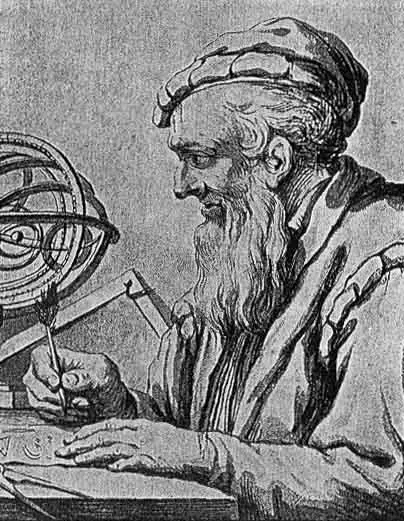
According to Bonatti, the most fundamental indication that a question is not radical concerns the ascending degree and the planet ruling the hour of the horary chart. The ruler of the hour or the ruler of the Ascendant falling at the very beginning or end of a sign, or on the boundary between two signs, is the first indication of a lack of radicality. Another very important rule involves comparing the hour ruler with the Ascendant ruler in terms of planetary nature and triplicity, and considering their agreement with the rising sign.
One of the more familiar considerations concerning the radicality of a horary question first appears in the work of Claude Dariot, a lesser-known sixteenth-century astrologer. This is the rule concerning the condition of the seventh house of the horary chart, most probably derived from the fourteenth aphorism of the pseudo-Ptolemaic Centiloquium: “The astrologer shall be entangled in great error when the seventh house and its lord are afflicted.” This is also one of the considerations Lilly included in his “Christian Astrology”. Besides the seventh-house rule, Lilly took account of two of Bonatti’s rules—those concerning early and late degrees and the ruler of the hour—as well as an afflicted Moon in the late degrees of a sign, particularly Gemini, Scorpio or Capricorn; the Moon and relevant significators being Vacua cursus (void of course), understood here as the absence of an applying aspect before a change of sign, or within the first five degrees of the next sign; and the Moon in the Via combusta (burning way), between 15 degrees Libra and 15 degrees Scorpio. After the Moon, he gave considerable weight to Saturn, the chief malefic, as an indication of a lack of radicality when retrograde in the first mundane house, close to the Ascendant. Combustion of the Ascendant ruler and an equal balance of favourable and unfavourable testimonies are further rules Lilly mentions among his considerations before judging a horary chart.
All this seems a fairly comprehensive list of reasons to decline a judgement. Some authorities, such as John Frawley, give these considerations little weight, treating them as excuses. He attaches significance only to the rule concerning early and late degrees on the Ascendant, and even then for practical reasons: if we do not know where the Ascendant falls, we may find ourselves working with entirely the wrong significator. In this age of precise computer calculations, even that concern has lost its relevance. Nevertheless, I believe these considerations can tell us something meaningful about the question itself, since they often reveal the querent’s attitude towards the situation or the circumstances affecting the eventual answer.
At the close of this admittedly rather long article, it is worth concluding that the matter is essentially very simple. Approach an astrologer when you genuinely and sincerely want to know something, when a particular problem is truly troubling you and you are seeking astrological advice. Bonatti even required depth of thought and contemplation concerning the subject of the question. The point is to be serious and sincere when consulting an astrologer: in this way, you will also invoke the “favour of heaven” and receive the right answer.
Excerpt taken from the article “Considerations before Horary Judgement” by Nataša Karalić Koprivica. Link