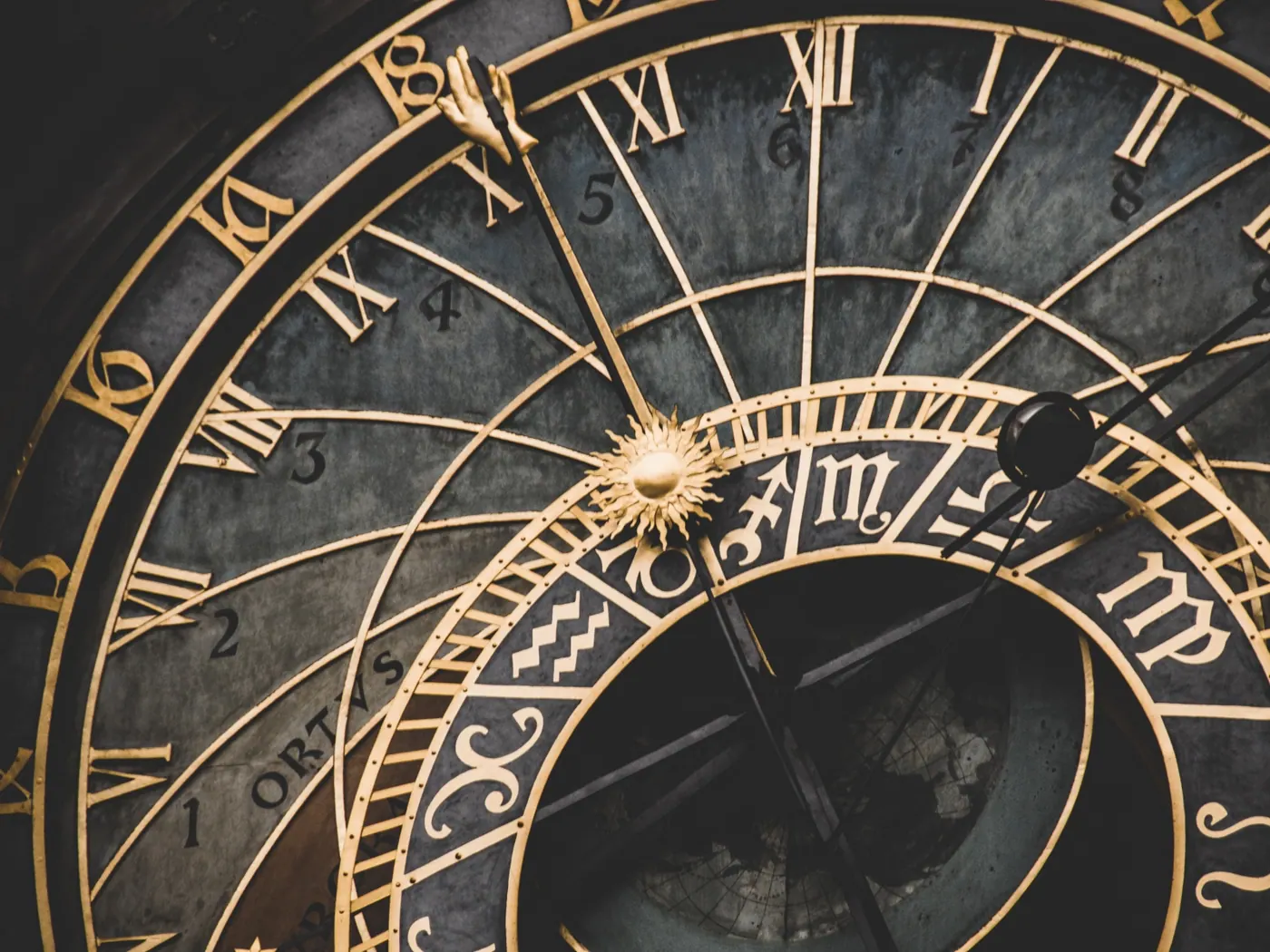
In the previous article, we discussed astrology as a symbolic expression of physis: the nature of living beings, and chiefly of human beings. We approached this through temperament and Destiny, which unfolds as the necessary expression of that unique nature. Here we shall follow much the same line, but turn our attention to the concept of Time as an essential dimension of that same physis, and to the way it is expressed in astrology, completing its symbolic account of the native’s nature. Since astrology is primarily a predictive art, time is necessarily one of its essential factors. It is the starting point of every interpretation: without the time of an event, we have no horoscope. Even the word horoscope contains an etymological reference to time, deriving from the Greek ὡρόσκοπος: ὥρα (hora), meaning “hour or time”, and σκόπος (skopos), meaning “observer” or “observation”. Together, these give us “the observation of the time (of birth, and so forth)”. This is because every being, every event, and everything that comes into existence on this planet is defined by the time at which it is born or arises. Time gathers all the qualities of nature present at a given instant into that single moment, which is impressed like a seal upon the native’s nature and, consequently, upon their destiny. Or, as the folk saying has it, “what is born crooked, time will not straighten”. Time is also the greatest resource a person can “command”, yet we are forever racing against it, somehow always short of it, unable to grasp it as we are pulled between past and future. Time is the conflict between spirit, soul and material body, for it joins these three only temporarily, through mortality. The ancient alchemists had an open-secret formula for overcoming Saturn (Chronos — Time): “Time must be mastered through rhythm, which will transform it into an eternal now.”
The seasons offer the most obvious illustration of this connection. They provide a basic division of the year, reflected in the division of the zodiac. Thus the first three signs — Aries, Taurus and Gemini — embody the attributes of spring, each in its own way. Aries, as a cardinal sign, marks the beginning of the season; its most characteristic qualities are embodied in Taurus, a fixed sign; and finally we have Gemini, which, as a mutable sign, retains the attributes of spring, though by now these are thoroughly mingled with those of summer. The same applies to the other seasons and their corresponding zodiacal signs. The Sun’s position in one of these signs marks our birthday, but, more importantly, the symbolic attributes of that season find expression in our temperamental constitution: our nature, or physis. The Sun in Aries will therefore bring warmth and moisture, or sanguine expressions of temperament, since these are appropriate to spring. From this we can clearly see how deeply we belong to the natural world around us, as yet another of its offshoots, bound to it in the most mysterious way — a bond we can interpret through astrological symbols.
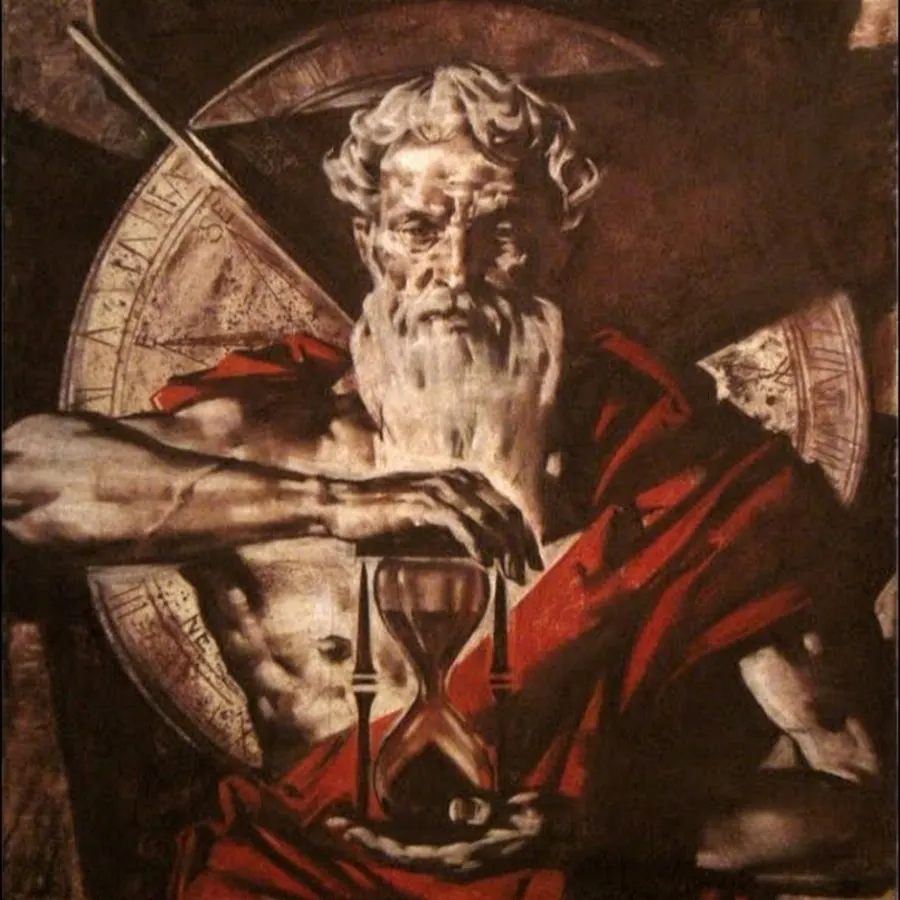
Beyond this, however, the fundamental premise is that Time is already inherent in living beings: it is part of their physis. This follows from the understanding that Time is numinous — that it arises from living beings — and is therefore biological rather than linear. Accordingly, Time varies with physis; more precisely, it varies according to the nature and character of the living entity that manifests it, so there are different kinds of Time. Every living being has a Flow — for Time is Flow — appropriate to it, one that represents or manifests its physis and is suited to that particular form of life. Our kind of Time, as human beings, therefore differs from those appropriate to other life forms. We can see this clearly by observing the natural world around us: different forms of life have a Time of their own, belonging to their nature, and the processes of their development unfold when the Time comes. Animals have mating seasons, migration seasons and periods of hibernation, all in keeping with the fluctuations in Nature that activate their internal clocks. Although these processes can be observed at the level of a species, they are also individual: not every bear enters hibernation at the same moment, but does so in accordance with its own inner Time, which dictates the pace of its development and, ultimately, evolution. The same is true of plants and, of course, human beings. It should be stressed that this Flow is not linear but more akin to a spiral. Certain seasons recur at regular intervals, yet each recurrence takes place on a different level from the last, so there is no repetition as such, whatever outward appearances may suggest. This appearance of repetition and sameness — of a line moving only forwards — led people to the abstraction of measuring Time by the calendar, even though this does not coincide with their real, uniquely inherent time. Not everyone who has lived forty calendar years is equally old. Nor does spring arrive everywhere on 21 March each year. Yet here, once again, people seem to have exchanged substance for form, giving precedence to the latter despite recognising its inadequacy. The original purpose of the calendar seems to have been forgotten: to serve as a symbolic representation of Time, not as its faithful measure.
We should, of course, note that all these individual times, inherited as part of the nature with which we are born, are subject to greater temporal currents and cannot extend beyond them; more precisely, they are merely segments of those currents. Each such overarching Time has its own characteristics, its own zeitgeist or spirit of the age, and all human natures and their times are subject to that spirit — to its aeonic or evolutionary force. A human being is thus “… but a straw amid the whirlwinds”. From this broader perspective, individual human natures need not embody every characteristic of their age. They may stand in opposition to it, perhaps even heralding Change, yet all of this remains part of that single purpose of Nature discussed in the previous article. Some Times will therefore favour bad people, devoid of honour and morality, as their leaders, granting them the highest offices and titles. Others, precisely because their natures are different, are ill-equipped to find their way through that vortex: they are out of step with the flow of Time, either lagging behind or moving ahead, while the natures of the former are synchronised with it. Of course, leaders are merely an expression of a collective unconscious need, and perhaps of the majority’s latent desire for that same way of life and character, which they secretly admire. Here we can see a kind of feedback mechanism at work, and how a change in consciousness can lend momentum to evolutionary progress — or, like a pendulum, swing back in the opposite direction. “What people will, time must endure,” as Njegoš observes. But that is a subject for another article, devoted to these greater temporal currents, also known as Ages — particularly since we stand on the threshold of a new one, the Age of Aquarius.
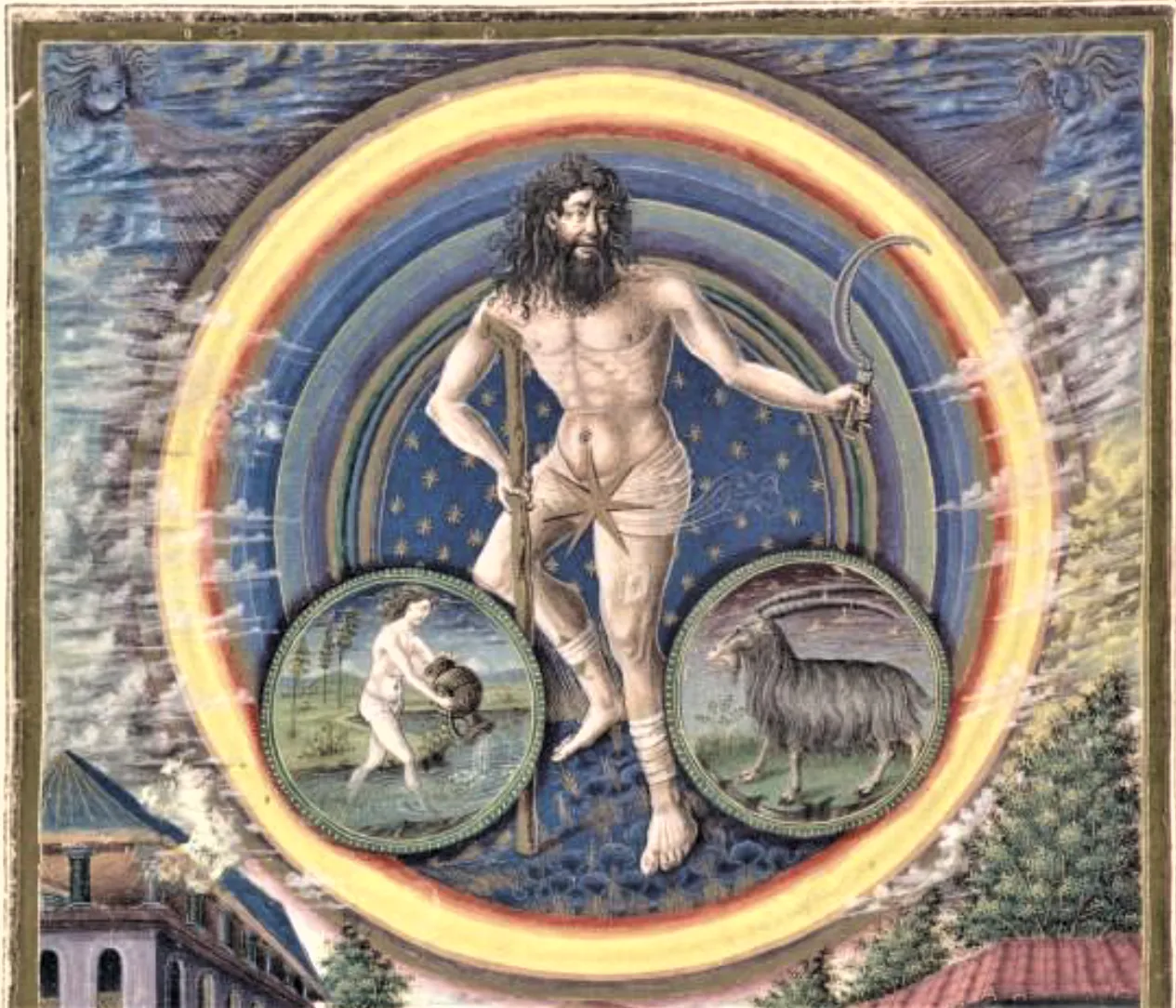
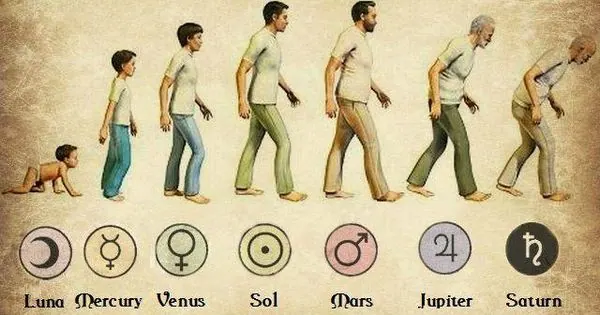
Let us return, however, to our central theme. As we have seen, each person has their own time, period or season in which their potential ripens and reaches its peak. There are therefore no fixed rules, although generalisations of this kind can be symbolically appropriate to a degree. For just as everyone has their own time, so everything has its time. In astrology, this Flow is represented by seven phases or periods of life corresponding to the seven planets, beginning with the Moon and proceeding through the Chaldean order to Saturn. Life is divided into periods of planetary rulership: the Moon rules the first four years, followed by Mercury until the age of sixteen; Venus rules from sixteen to twenty-two, the Sun from twenty-two to forty-two, Mars until fifty-six, Jupiter until sixty-nine, and Saturn for the remainder of life. Shakespeare beautifully described all these ages in his play As You Like It:
(…) All the world’s a stage, And all the men and women merely players; They have their exits and their entrances, And one man in his time plays many parts, His acts being seven ages. At first, the infant, Mewling and puking in the nurse’s arms. Then the whining schoolboy, with his satchel And shining morning face, creeping like snail Unwillingly to school. And then the lover, Sighing like furnace, with a woeful ballad Made to his mistress’ eyebrow. Then a soldier, Full of strange oaths and bearded like the pard, Jealous in honour, sudden and quick in quarrel, Seeking the bubble reputation Even in the cannon’s mouth. And then the justice, In fair round belly with good capon lined, With eyes severe and beard of formal cut, Full of wise saws and modern instances; And so he plays his part. The sixth age shifts Into the lean and slippered pantaloon, With spectacles on nose and pouch on side; His youthful hose, well saved, a world too wide For his shrunk shank, and his big manly voice, Turning again toward childish treble, pipes And whistles in his sound. Last scene of all, That ends this strange eventful history, Is second childishness and mere oblivion, Sans teeth, sans eyes, sans taste, sans everything. (…)
As we can see, in this most general division the Moon governs the first four years of life. This accords perfectly with the fact that children at this age chiefly absorb impressions from the outside world, responding to them entirely emotionally and unconsciously, while remaining deeply dependent on their mother — all of which corresponds symbolically to the Moon. The native’s experiences during this period will depend upon the Moon’s natal placement. Thus, although the period is broadly universal for people of this age, and their experiences are similar, its scope and actual manifestations remain individual, conditioned by the natal configurations. As in the previous article, I would like to illustrate this principle through Mars and Venus. In this connection, I have always found it interesting that certain professions, such as modelling, have a clearly defined window in which a career can begin: precisely the period of Venus, during adolescence. Likewise, men generally experience a kind of personal zenith in their forties, the period of Mars, whereas for women the reverse applies, since this is when menopause begins. It is worth adding that the temporal conditions described by this division also follow from our earlier discussion of the bodily humours. The first quarter of life is most characteristically sanguine, with blood as its corresponding vital humour, and so on through to the coldness and moisture of phlegm and black bile. It is therefore hardly surprising that the end of life belongs to Saturn, whose symbolism encompasses all of this. We encounter the same parallels even in everyday expressions, such as “the autumn of life”. Through astrological predictive techniques, this division of Time is brought down to an increasingly individual, and therefore more distinctive, level of experience. Thus we have the firdaria, which divide life into planetary periods, likewise following the Chaldean order but beginning with the luminary of the time of birth: the Sun in diurnal nativities and the Moon in nocturnal ones. These periods are interpreted according to the natal position of the relevant planet. Within this framework, increasingly specific techniques — firdaria subperiods, profections, primary directions, progressions, and planetary, solar and lunar returns — further refine the timing of a given event.
One of the primary considerations in interpreting a natal chart is the assessment of longevity: our lifespan itself is contained within the chart. This assessment begins with the hyleg, the planet or point that bears the life force, and its ruler, known as the alcocoden. The alcocoden is the planet with the greatest dignity at the hyleg’s position; according to some authors, it must also aspect the hyleg. Any planet can serve as alcocoden, and each has its lesser, middle, greater and greatest years. The years allotted are those appropriate to the strength of the planet acting as alcocoden in the nativity. The lifespan may also be determined by the hyleg’s encounter with the anareta, the destroyer of life, according to the arc of direction between them. What matters here, however, is the correlation between the assessment of a horoscope’s life force or strength — and thus the individual’s nature and constitution — and the duration of their life. This shows how time is woven into the individual’s physis.
This makes it clear that Time is inherent in a being’s nature, for the potential promised by the natal chart will not be realised until it is symbolically activated through astrological predictive techniques — until its Time has come. In keeping with what we have already discussed, this should not be taken to mean that these techniques cause or determine anything. They merely show, symbolically, that my time, your time or her time has arrived. Thus, although our twenties are regarded as the ideal period for marriage, this will not always be so: each person has their own time in which that experience can find its fullest expression. The same applies to a career, and to good or ill fortune in life more generally. Some people reach their peak in later years, others earlier, in youth, even though the general division places life’s zenith in the forties. By examining the natal chart, we can discern the innate potential of the native’s physis, and how it will unfold through Time as an expression of their nature, in an entirely unique way. For the structure of a personality influences the pace at which things happen in a person’s life: that pace is contained within their nature. One person will build their achievements patiently and diligently; another will win them through bold advances and struggle; another will undermine themselves through faltering and retreat. Each, at their own rhythm, unravels the threads of the fine fabric of their nature, at once discovering and shaping themselves through the experiences that follow. Astrology, as the language of Nature, draws all these dimensions into its symbolism, allowing us a glimpse into the eternal Mystery that is Life.
All of this ultimately brings us to the fundamental principle of Hermeticism: “as above, so below”. The temporal cycles of the cosmos appear to bear a certain correlation to the inner cycles of human nature and its development, for there is an evident synchronicity between the movements of the heavenly bodies and the changes and events of human lives. The thread linking the macrocosm and its cycles to our microcosm and its cycles is unbreakable. As we discussed in Destiny in Astrology, this connection is not causal, nor can it be explained by the exact methods of modern science. It is simply mystical, expressed in the only language through which it can be explained: that of astrological symbolism, which enables us to penetrate this connection and learn more about ourselves and our nature. Through this all-encompassing scope and wealth of symbolism, extending across every level of existence and through all times, astrology will always hold the keys to the treasury of Life’s Wisdom!