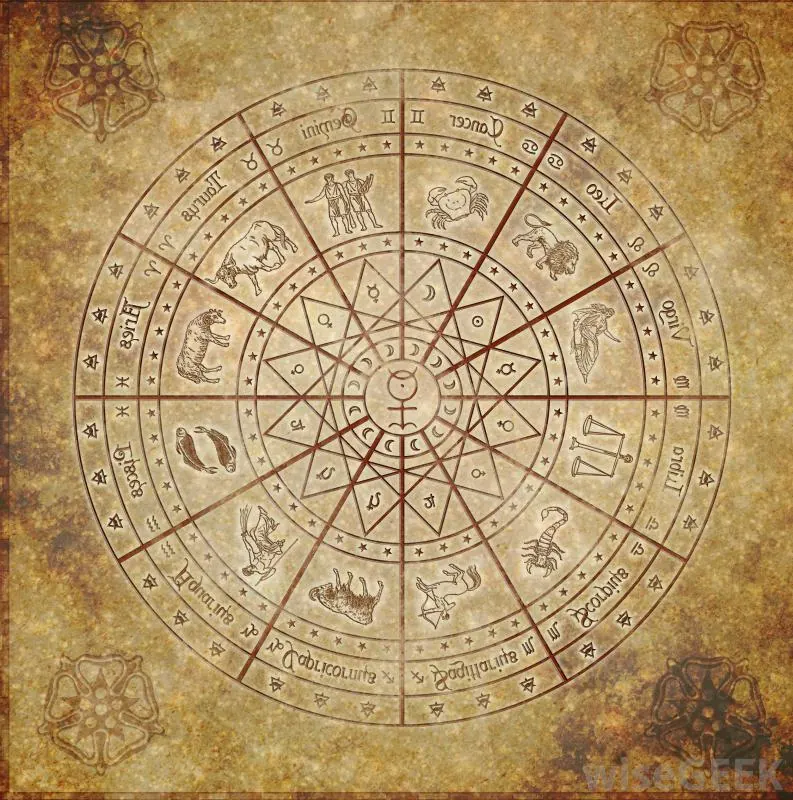
In the first part of this study of the Arabic lots, we focused chiefly on what they are, their role in the natal chart, and the rationale underlying these perhaps most mystical of astrological factors. In this instalment, we shall examine the four principal and most important Arabic lots in the natal chart according to Vettius Valens: Fortune, Spirit, Eros and Necessity.
Let us first consider the nature of the Lots of Fortune and Spirit, the two most important Arabic lots in the horoscope. Their significance is evident from the calculation itself, which involves both luminaries, the Sun and Moon, projecting their relationship of “light and darkness” from the Ascendant. Since the luminaries and the Ascendant constitute three of the four most important points in the horoscope, alongside the MC, the importance of these lots is further emphasised.
Fortune represents the quality of the soul’s life, its earthly happiness and comfort, and the gains and losses of life. Valens calls it the archetypal lot (archetupon kleron). Both Valens and Dorotheus of Sidon identify Fortune as the lot to consult when the triplicity rulers of the sect light are poorly placed. They emphasise that, if Fortune and its ruler are well placed, the native will nevertheless experience joy and success in life through fortunate circumstances, despite the poor condition of the triplicity rulers. As mentioned earlier, Fortune is more closely concerned with matter and material acquisition, making it one of the more important factors in assessing the native’s financial circumstances and prospects for property. As the Moon’s lot, it relates more to the lower aspects of the soul and its attachment to material life. The Moon is the celestial body closest to the sublunary sphere of bodily existence, hence its association with the body and gluttony. Fortune’s virtue is hope: the soul’s capacity to rise above life’s burdens and privations. It reflects the potential to survive even the harshest trials while preserving the hope that something greater and better can be attained. Its vice is gluttony, which signifies the “pollution” of the soul by earthly appetites and desires. A prominent Fortune indicates powerful passions that are difficult to satisfy, a craving for wealth, and so forth.
Fortune is sometimes used as an alternative Ascendant. According to Valens, houses derived from Fortune are interpreted in much the same way as those counted from the Ascendant, although there are indications that they relate more particularly to what befalls the native, their circumstances and bodily concerns. Valens places particular emphasis on the eighth sign from Fortune as a place describing the nature of death, so much so that discussion of this sign plays a prominent role in his examples of violent deaths. He also focuses on the eleventh sign from Fortune, which he calls the “place of acquisition”, stressing its potential to bring property and goods when favourably disposed—that is, when benefics occupy the sign or are configured to it. He likewise treats the domicile ruler of Fortune much as he does the ruler of the Ascendant: the sign it occupies, counted from the lot, indicates important themes in the native’s life or, in some way, describes the life itself.
Spirit, or Agathos Daimon, also called pars futurorum and known in Hebrew as ta'alima, is the Lot of Spirit, the Lot of the Divine Spirit, and the Lot of Mysteries and Prophecy. It is often a significator of the soul in its own right. It is associated with one’s personal understanding and experience of God. Its virtue is faith, a word which itself points to the religious affinities of the incarnated soul. When prominent in the chart, it signifies the soul’s uprightness and devotion. This is the lot of the right path towards God and of the highest spiritual aspirations. It represents the spiritual aspect of the soul that seeks a return to the timeless realms. It is the most important of the seven lots.
When poorly integrated, its vice is arrogance, or pride. In Christianity, this is the primal sin that preceded the fall of the angels. Some authors regard Spirit as the most important of all the lots because it symbolises the timeless spirit. It is prominent in the charts of people with higher spiritual aspirations: on the Ascendant or MC, or in close aspect to the Sun, Moon, its own dispositor or the ruler of the ninth house. Together with its dispositor, this lot symbolises the soul’s strength, motivation and capacity for movement. If poorly placed in the twelfth, eighth or sixth house, or even the second, without an aspect to either luminary or its own dispositor, it indicates weakness of faith. This is especially so when Fortune is simultaneously stronger and more prominent, often signalling the soul’s excessive attachment to matter and time, but also an atheistic disposition or a rebellious mind.
Spirit held a similar significance in medieval astrology. Guido Bonatti tells us that this lot concerns God, divine worship or one’s relationship with God, as well as secrets. It is therefore associated with the native’s conception of God, or their highest spiritual ideal. Its importance is considerable, particularly in spiritual counselling, where we wish to understand what the person values most deeply. Their approach to spirituality can also be interpreted through the element of the sign occupied by the lot. In air signs, knowledge will be valued most highly and the approach will be more intellectual; water signs suggest a devotional approach; fire signs express it through activity, philanthropy and creativity; while earth signs focus on practical benefits. The placement of the lot’s ruler indicates the areas of life in which the native will most strongly express this impulse. Spirit, too, can be used as an alternative Ascendant, allowing a chart constructed in this way to reveal the native’s spiritual potential and outlook.
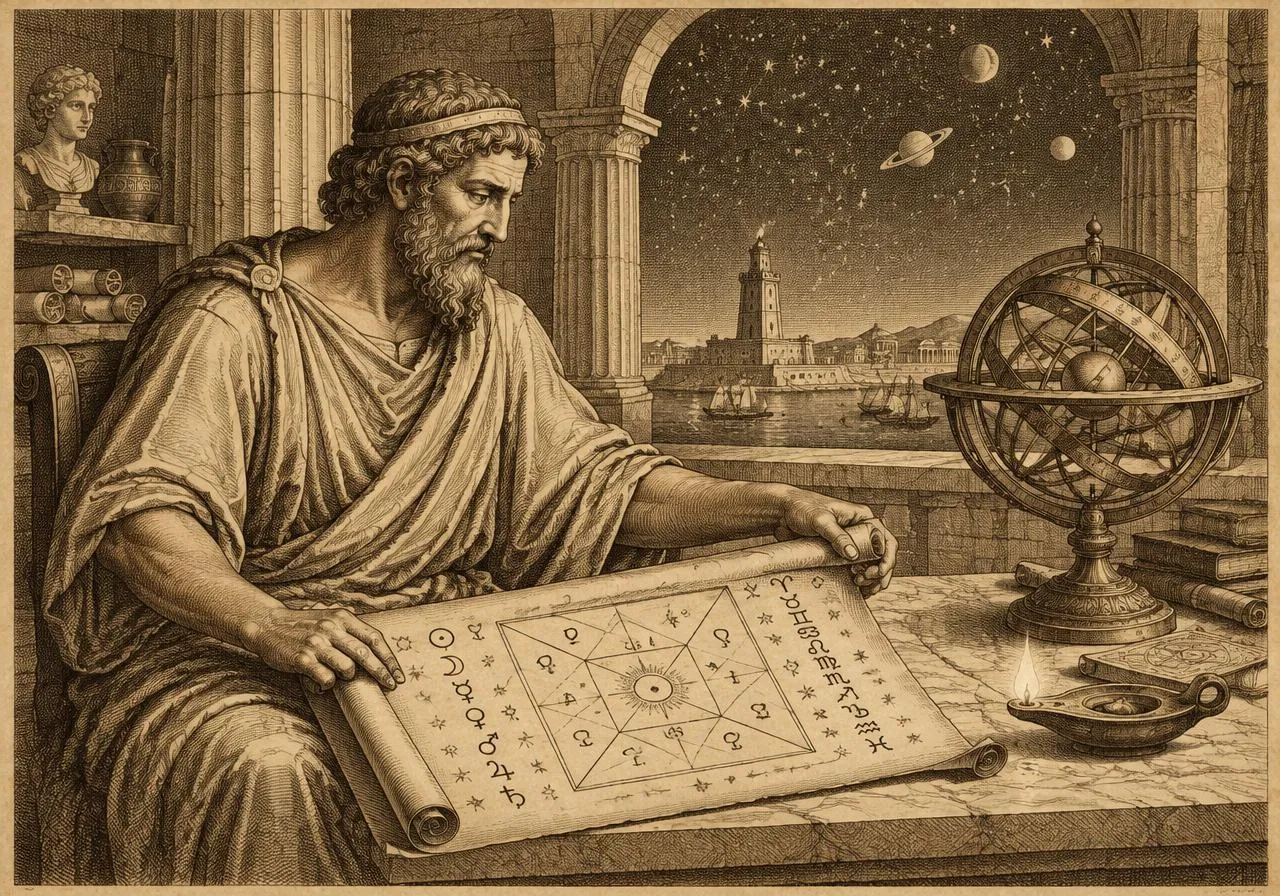
Valens calculates the Lots of Eros and Necessity differently from the methods given earlier in our discussion of the seven Hermetic lots.
According to Valens, the Lot of Eros is calculated by projecting the distance from the Lot of Fortune to the Lot of Spirit from the Ascendant, reversing the calculation by night. Valens states that Eros signifies desire (epithumia).
The Lot of Love in operative places, with benefics in conjunction or aspect, produces moral aspirations and makes a person a lover of the good. Some turn to education or the arts; their character is softened by pleasures, and their hopes do not prove vain (they are fortunate). Others are people of love and sexual desire who take pleasure in life … This lot is an important place in the nativity, and therefore deserves your attention.
This passage shows that Valens associates the lot with moral qualities and intellectual aspirations, but also with sensuality: in some people, Eros is directed towards the mind; in others, towards the body. Its placement, considered alongside the other Venusian factors in the horoscope, allows us to judge how fortunate a person is in love, how much they are loved, how capable they are of loving, their moral character, and how they pursue goodness and spiritual concerns. Like all lots, it should occupy a favourable house and a sign ruled by benefics, and be activated by close aspects from its ruler, the benefics or the luminaries. Some interpreters also call it the Lot of Philosophers. Hephaestion adds that Dorotheus describes its use by certain astrologers in examining friendship (philias), and accordingly includes it in his treatment of that subject in the Apotelesmatics.
The Lot of Necessity is calculated in the opposite direction: the distance from Spirit to Fortune is projected from the Ascendant, with the calculation reversed for nocturnal births. In light of the considerations explored in the first part, it is clear that this calculation, too, rests on the underlying discussion of the ruling luminary, particularly if we understand Spirit as the Sun’s lot and Fortune as the Moon’s. With the Lot of Eros, we again see movement from the luminary contrary to sect—the Moon—towards the ruling luminary, the Sun.
Valens states that this lot signifies enemies (echthron). It appears to describe the nature and circumstances of conflict and competition: malefics associated with it bring failures and attacks, whereas its association with benefics signifies victory and the native’s ability to overcome every trial. Thus Valens writes:
The Lot of Necessity in operative places, with benefics in conjunction or aspect, brings family ties or other associations with great people, as well as the downfall or death of enemies. If malefics are in conjunction, it brings lawsuits, trials and expenses. As a result, people fail to attain their aims and live in misery. If the configuration is afflicted, they are condemned or ruined.
It is worth noting that there are also specific predictive techniques based on these lots, which indicate the most important periods of life concerning the matters they signify. One is Aphesis, or zodiacal releasing, which can be calculated from Fortune for matters of health and the body, and from Spirit for the most important periods concerning career and reputation in the world. The Lot of Love, or Eros, has likewise proved effective for questions of love and marriage. Benjamin Dykes also concludes that Saturn’s transits over the Lots of Fortune and Spirit mark life’s most sensitive periods. A similar conclusion may be drawn for the other two lots discussed here.
This concludes our overview of the most important Arabic lots, which offer a somewhat more esoteric insight into the natal chart and the potential of the incarnated soul in earthly life. Through them, we can gain an understanding of the native’s spiritual nature, expressed in turn through fundamental ethical precepts and principles. This complements the temperamental structure of the personality discussed in an earlier article, helping to complete the weave of the Universe as it manifests through the native’s unique physis, portrayed in its entirety in the natal chart through the symbolic language of astrology.
- Chris Brennan – Hellenistic Astrology: The Study of Fate and Fortune
- Chris Brennan – The Theoretical Rationale Underlying the Seven Hermetic Lots
- Robert Zoller – Arabic Parts in Medieval Astrology (a lesson from the DMA course)
- Nataša Karalić Koprivica – traditional astrology blog link