Vega is the principal star of the constellation Lyra and one of the brightest stars in the sky. It played an important role in the calendar of ancient Rome, as its morning setting marked the beginning of autumn. A brilliant star of a pale sapphire hue, it is easily seen around the time of its culmination in mid-August. Pliny calls it the Harp Star, while the Babylonians knew it as the “Star of the Queen of Life”.
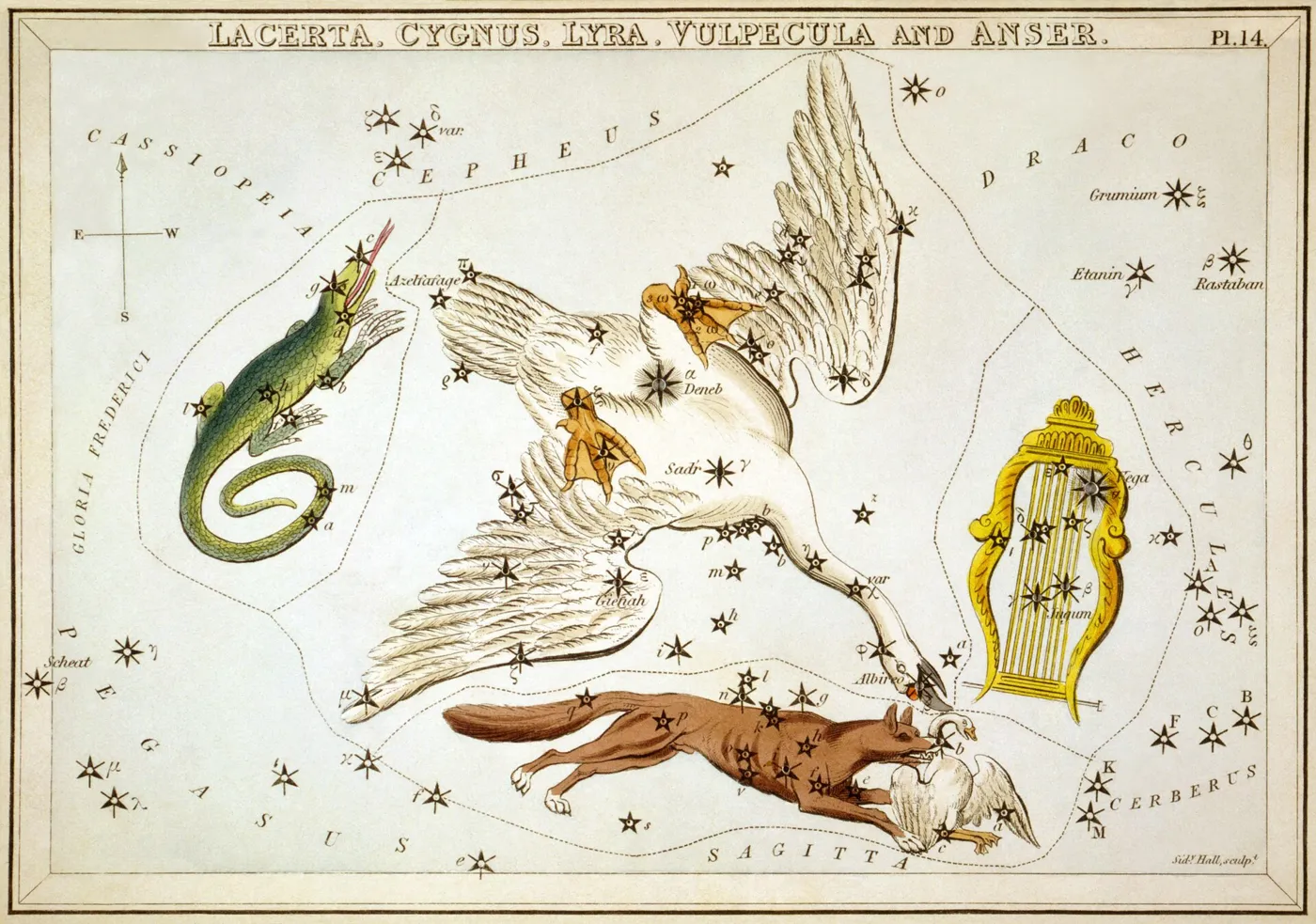
The constellation Lyra lies on the western edge of the Milky Way, beside Hercules, where, according to one account, it was placed to ease his endless troubles. Aratus calls the constellation the “little Tortoise”: according to the myth, Hermes invented the instrument as a boy after finding a tortoise shell washed ashore and fitting it with dried sinews for strings. He later offered it as a gift to Apollo, who in turn gave it to his son Orpheus.
Ptolemy assigns the stars of this constellation the nature of Venus and Mercury, while Manilius reflects on its mythological origins, describing how it bestows gifts for song, music and the arts, together with the power to soothe:
Then, as Lyra rises, there emerges from the ocean the form of the tortoise shell, which only after death gave forth sound beneath the fingers of its heir. With it Orpheus once brought sleep to the waves, feeling to the rocks, hearing to the trees, tears to Pluto, and at last a limit to death. Hence shall come the gift of song and melodious strings, hence pipes of varied forms that warble sweetly, and whatever is stirred to utterance by the touch of a hand or the force of breath. The child of Lyra shall sing enchanting songs at the banquet; his voice shall lend sweetness to the wine and hold the night captive.
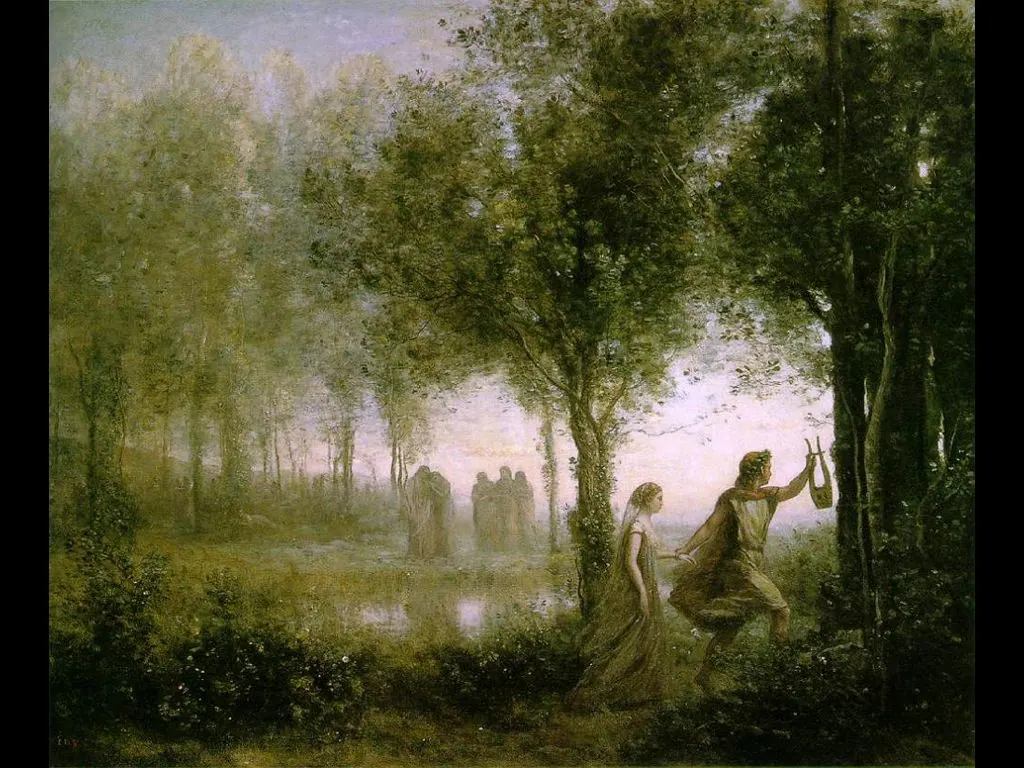
In ancient India and Egypt, the constellation was depicted for millennia as an eagle or a vulture, and the lyre was therefore often shown enfolded in a bird’s wings. The myth of Orpheus also links the eagle and the harp. So devastated was Orpheus by his wife’s death that he vowed never to love again. A group of Thracian women were so enraged by his rejection that they killed him and threw his lyre into a river. Zeus commanded an eagle to retrieve it, and both were then placed in the heavens in honour of Orpheus’s everlasting love. The constellation is often called Aquila Cadens or vultur cadens, the falling eagle or vulture. William Lilly refers to it both as “Lyra” and as the “falling vulture”, noting that, when afflicted, it signifies a violent death.
Vega itself is also said to bestow artistic talents, for as the principal star it carries the chief significations of its constellation. When well placed on the angles, it is said to promise great success, wealth and fame. Its Venusian fondness for an easy life can often lead to debauchery and dissipated energies when afflicted. Lilly warns that the star inclines towards gravity and sobriety, “but only in outward appearance, for usually the person is lascivious”.
According to Ptolemy, Vega has the nature of Venus and Mercury, while Alvidas gives that of Saturn trine Jupiter in earth signs, especially Capricorn and Taurus. It bestows charity, idealism, hopefulness, refinement and changeability, making the native grave, sober, outwardly pretentious and usually lascivious; in this description, Robson follows Lilly’s observation. When favourably configured, Vega gives artistic talents, especially for music and acting, as well as a fondness for an easy life. In eccentric artists, this often leads to debauchery. Associated with Jupiter and Venus, Vega paves the way to wealth and fame. Yet if other influences intervene, that wealth may be lost again. Great success is promised when Vega is on the Ascendant or MC. Vega may also be found in relevant aspects in the nativities of statesmen, politicians and other people of prominence and influence. Associated with the Moon and Neptune, it gives an inclination towards the occult and mysticism.
Despite the star’s generally favourable influence, the predominantly negative descriptions Robson presents in his book “The Fixed Stars and Constellations in Astrology” are striking:
On the Ascendant: May be versed in judicial matters. Avengers of crime and those entrusted with public courts and inquiries. If Saturn makes any aspect to Vega as it rises, the native will pursue this calling with such fanaticism as to resort to torture and execution in dealing with what they consider evil.
With the Sun: Critical, abrupt, reserved, unpopular, fleeting fame, influential position, insincere friends. If also with Mars, above the horizon, and the Moon is with Procyon, death from the bite of a rabid dog.
With the Moon: Public disgrace, probably through forgery, losses through writing, poor health, success in business, gains through annuities or a pension. If a malefic is also with Scheat, violent death.
With Mercury: Vega describes someone suspicious, reserved and bitter, with thwarted ambitions; double-dealing, secret enemies in influential positions, trouble with the mother, business losses.
With Venus: Hard-hearted, cold, miserly, poor health, ugliness or deformity.
With Mars: Scientific interests, unpopular opinions, moral courage, favourable for financial gain.
With Jupiter: Loss through legal affairs, favourable for financial gain, danger of imprisonment.
With Saturn: Strong passions, originality, many Mercurial difficulties, reputation damaged by unjust accusations, trouble with superiors, domestic difficulties, few or no children, the latter half of life more favourable, sudden death.