I conceived these articles on astrology in Rome as a way of opening up the subject of astrology’s relationship with politics: the influence astrologers have exerted on politics throughout history, their relationships with rulers, and so on. Ancient Rome seemed a logical starting point for “astrology and politics”, since Babylonian astrology, though closely associated with the royal court, cannot be regarded as astrology in the modern sense.* Yet from the outset I found it impossible to draw a clear distinction between politics and religion in that period. Given how closely the two were intertwined, I laid some of the groundwork in the previous article. Before turning to more specifically astrological matters, however, we must linger a little longer in these overlapping waters, exploring the imperial cult and religion in Rome more generally.
We have all heard somewhere that the “mad Roman emperors” considered themselves divine and identified themselves with the Sun. Almost automatically, we associate all this with the general decadence of the empire’s final centuries—the same decadence that supposedly brought about its collapse and the ultimate triumph of a new religion, Christianity. But what does it actually mean to say that emperors considered themselves divine? Did they really believe they were immortal or omnipotent? That they were a god, the “Unconquered Sun”, like Commodus, or like Septimius Severus, who had himself depicted as Jupiter and his wife as Juno? Most importantly, did their subjects truly regard them as gods, or did they worship them for purely political—that is, “pragmatic”—reasons?
Caesar was the first Roman statesman, and the only one (!), to be officially declared divine during his lifetime. Since he lost his life shortly after receiving these final, divine honours—which were consequently never formally implemented while he lived—subsequent rulers, the Roman emperors from Augustus onwards, did not dare accept divine honours from the Senate. No one wished to repeat Caesar’s unhappy fate. Caesar’s “divinity” was a form of honour, a distinction bestowed upon a powerful man by the Senate as the legislative body. The same principle by which the Romans honoured the gods—Jupiter, for instance, as the most powerful—could also be applied to a mortal. For the Romans, as for certain other cultures and civilisations, “divinity” was a relative concept. They did not conceive of a god as an absolute, omnipresent, omniscient and omnipotent being, as we instinctively do today under the influence of Christianity.
In ancient, pre-Christian Rome, the word “religion” denoted respect, conscientiousness and the honouring of one’s superiors—not necessarily gods, but people too. Re-ligare binds together, creating a bond of obligation between gods and human beings. At the beginning of the year, for example, vows were made to the gods on the emperor’s behalf, promising that a certain number of animals would be sacrificed if he survived the year. If the emperor was no longer alive the following year, however, the gods would go without their “worship”: if they failed to fulfil their side of the bargain, they would receive no sacrificial animals, and the temple would be closed. By the same logic, when the death of Germanicus, Tiberius’s nephew and a favourite of the Roman people, was announced, the grieving populace stoned temples and overturned altars in protest and anger at the gods. Only with the advent of Christianity did the concept of “religion” begin to carry connotations of belief and personal conviction. In its early usage, the word referred primarily to ritual and behaviour—not excluding belief itself, but placing the emphasis elsewhere. Honours paid to a great military commander, such as erecting his statue, differed from the honour of offering a sacrifice to Jupiter only in degree, not in kind. In both cases, honour and reverence were shown to those who possessed power, with divinity understood as a relative term denoting greater power. In this sense, given the extent of his power, Caesar was a “god” in relation to everyone else—the popular expression “God and the rod”, meaning someone who wields absolute authority, neatly captures the principle.
Political power was closely bound up with religious power, and it is really we who seek a clear dividing line in that period: power was power. This is also evident in the fact that senators and magistrates—the governing authorities—performed the official divinations of the state. Before any public undertaking, the will of the gods had to be consulted and a sacrifice offered. The condition of the animal was then used to “divine” whether the sacrifice had been accepted, and thus whether the gods approved of the proposed action. Such divinations were performed before battles or before an assembly began its proceedings, making divination, as a religious activity, an integral part of politics. Moreover, all the priestly orders concerned with divination—such as the augurs, haruspices and custodians of the Sibylline Books—had other “duties” besides. They did not “specialise” exclusively in divination but also engaged in politics, just as others practised divination. As a final example, let us take the office of chief pontiff. After the death of Lepidus, “the third man” in the triumvirate with Antony and Octavian, Octavian Augustus finally acquired the title of pontifex maximus, or chief priest. Pontifex literally means “bridge-builder”: the chief priest thus represented a bridge between gods and human beings, mediating between them. From Augustus onwards, therefore, the emperor, as pontifex maximus, was responsible for good “communication” and harmony between the Roman people and their gods, for Rome’s official cults, and for reviving ancient ones. This title later passed from the Roman emperor to the Pope in Rome.
It was precisely in his capacity as pontifex maximus that Caesar initiated his famous calendar reform, introducing the so-called Julian calendar. With Caesar, too, began the “policy” of bestowing divine honours in Rome, although the Senate subsequently declared an emperor divine only after his death. Thus, after the death of Augustus, Caesar’s adopted son and successor, we read that the Senate granted Augustus divine honours—not that Augustus was “a god”! The practice of deifying deceased emperors soon extended to deceased empresses and even rulers’ children. One story tells how Nero struck his pregnant wife during an argument, causing injuries from which both she and the child died. After this tragedy, the grief-stricken Nero deified both her and their unborn daughter. These two deifications are historical facts, but the circumstances of the empress’s death remain uncertain: many false stories circulated about Nero and other hated emperors. Nevertheless, this cynical story tells us something about attitudes towards this class of divinities, the deified members of the imperial family. To the average Roman, dead emperors, their wives and their children were of no particular importance. By the beginning of the third century, there were already some twenty such “divi”—deified emperors and members of their families—but not all had their own temples and priests. The less important divi shared a temple and priests with members of their family: even the divi were not equal in their divinity. Worship of the divi was sustained only at the political level. To an ordinary Roman, the emperor mattered, and was honoured, while he was alive, not after his death: a dead emperor had no power. Nor were the divi ever assigned an “official sphere of dominion”, as Mars, for example, ruled over war. They had no power or influence over any particular sphere of life and ranked lowest among all the Roman gods.
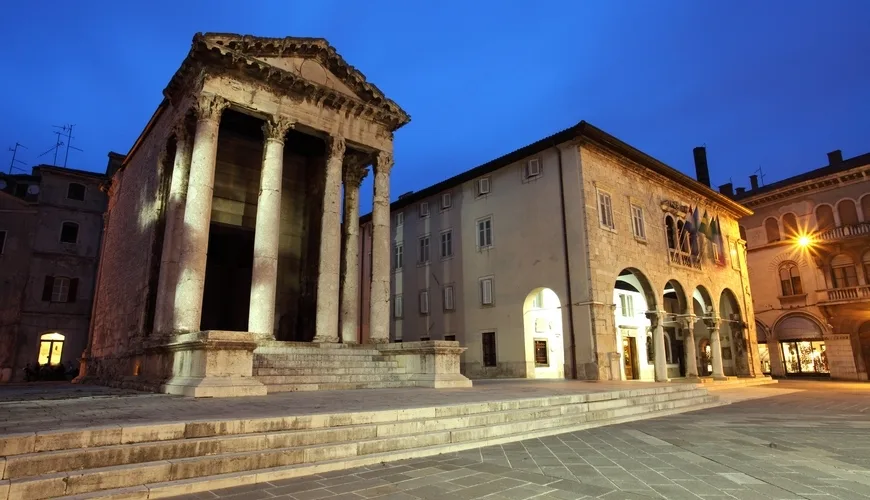
The story was somewhat different with living emperors. Although they were never officially declared gods during their lifetimes, and there was therefore no official state cult in their honour, they were nevertheless worshipped as divinities while alive—but in the “private” sphere, which received no state funding. Private cults could also be practised in public places, but that did not make them “state” or official cults. A city, for example, might inform the emperor that it wished to honour him by granting him divine titles, building a temple and appointing priests to offer sacrifices in his honour. It was then for the emperor to accept—or refuse—these honours. Even some less than “modest” emperors, such as Claudius, refused certain honours because, as with the “real” gods, worship implied reciprocity. By accepting worship, an emperor was expected to give something in return; he incurred a certain “obligation”. Emperors therefore calculated carefully which honours to accept, which to refuse, and how to do so. Augustus would accept temples in his honour on condition that Roma, the goddess of the Roman people, was worshipped alongside him.
Although the Senate granted Caesar divine status in the final weeks of his life—giving him his own flamen, or priest of the cult, permission for his image to be carried in procession alongside those of the other gods, and various other honours implying godhood—he was formally deified by decree only in 42 BC. This was after his death, as the divine Julius, divus Julius. Unlike the later imperial cults, Caesar’s was self-contained and closed: only his own flamen offered sacrifices to him, never the other priestly colleges when they worshipped Rome’s gods and the other divi. During the funeral games held in Caesar’s honour by the young Octavian in 44 BC, a comet appeared in the sky and remained visible for several days. The delighted crowd believed it was a “sign” that Caesar had been received among the gods. Later, it seems, the comet came to be regarded as Caesar’s soul itself, making the celestial body a kind of physical manifestation of his apotheosis—his becoming a god. This event helped bring about Caesar’s official deification soon afterwards, allowing his successor Octavian to adorn himself with the title divi filius, son of a god: Caesar had adopted Octavian in his will.
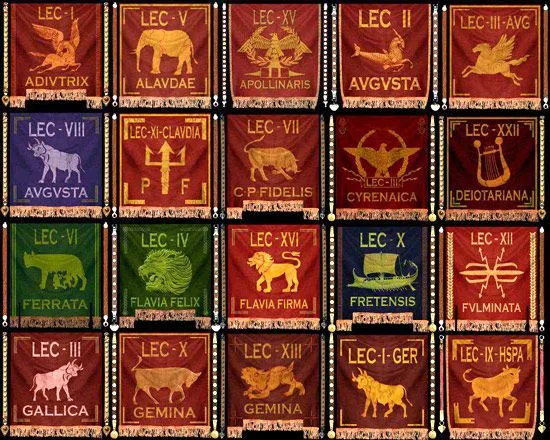
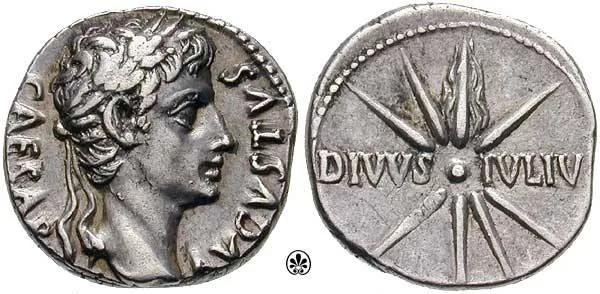
Caesar himself employed the symbolism of Venus, the planet and goddess regarded as the ancestress not merely of the Roman people as a whole, but of the Julian family itself, and thus of Caesar. Even during his lifetime, a star, the sidus Iulium, appeared beside his portrait on coins. Augustus adopted this symbol of the Julian star on his own coinage, while in the popular imagination the symbolic star was often confused with the historical comet of 44 BC. There is certainly no basis for the story that Octavian, then young and not especially powerful, promoted “Caesar’s comet” as a divine sign for political reasons, or that he invented the sidus Iulium, since Caesar had already placed Venus on his own coins. After Caesar’s death, the star was also added to his bust in the Forum. Since Venus rules Taurus in astrology, we have a probable explanation for Caesar’s choice of this particular zodiacal sign for his legion’s standard. In doing so, he began the tradition of commanders placing zodiacal signs on legionary standards: either their own birth signs or the sign under which the legion had been founded. In the top row of the image above, we can also see Augustus’s Capricorn. How far Caesar personally believed in astrology itself is unknown.
Besides the Julian star, Augustus also used Capricorn as an astrological symbol. Capricorn was regarded as his “birth sign”, though it was clearly neither his Sun sign nor his Ascendant, or rising sign. We shall look at Augustus’s natal chart in the next article. Besides his Moon being in Capricorn, one of the more plausible explanations for his emphasis on the sign is that his Lot of Fortune also falls there.** In certain depictions, Augustus’s reign is symbolised by Capricorn together with the attributes of Bona Fortuna, the goddess of good fortune. One of Fortuna’s attributes, for example, is the cornucopia, or horn of plenty, which we can see on Capricorn’s back on this gold coin of Augustus.
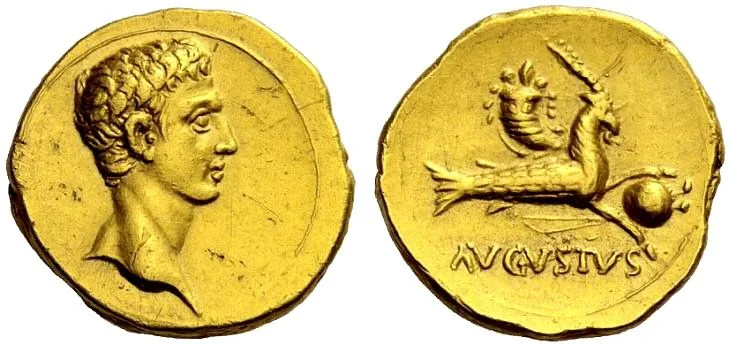
Astrology was gaining ground among the Roman elite at the time, and someone versed in the subject may have suggested Capricorn to Augustus as a powerful symbol. Capricorn is a solstitial sign—in the tropical zodiac, 0° Capricorn marks the winter solstice—the sign in which the Sun conquers darkness and the days begin to lengthen. By adopting it, Augustus symbolically defeated his enemies, Caesar’s betrayers, and inaugurated a new age, a golden age. The mythological Golden Age had been ruled by Saturn, the ruler of Capricorn. Capricorn appears on Augustus’s coinage as early as 41–40 BC, including as a form of propaganda against Mark Antony, who was still his “colleague” in the triumvirate at the time.
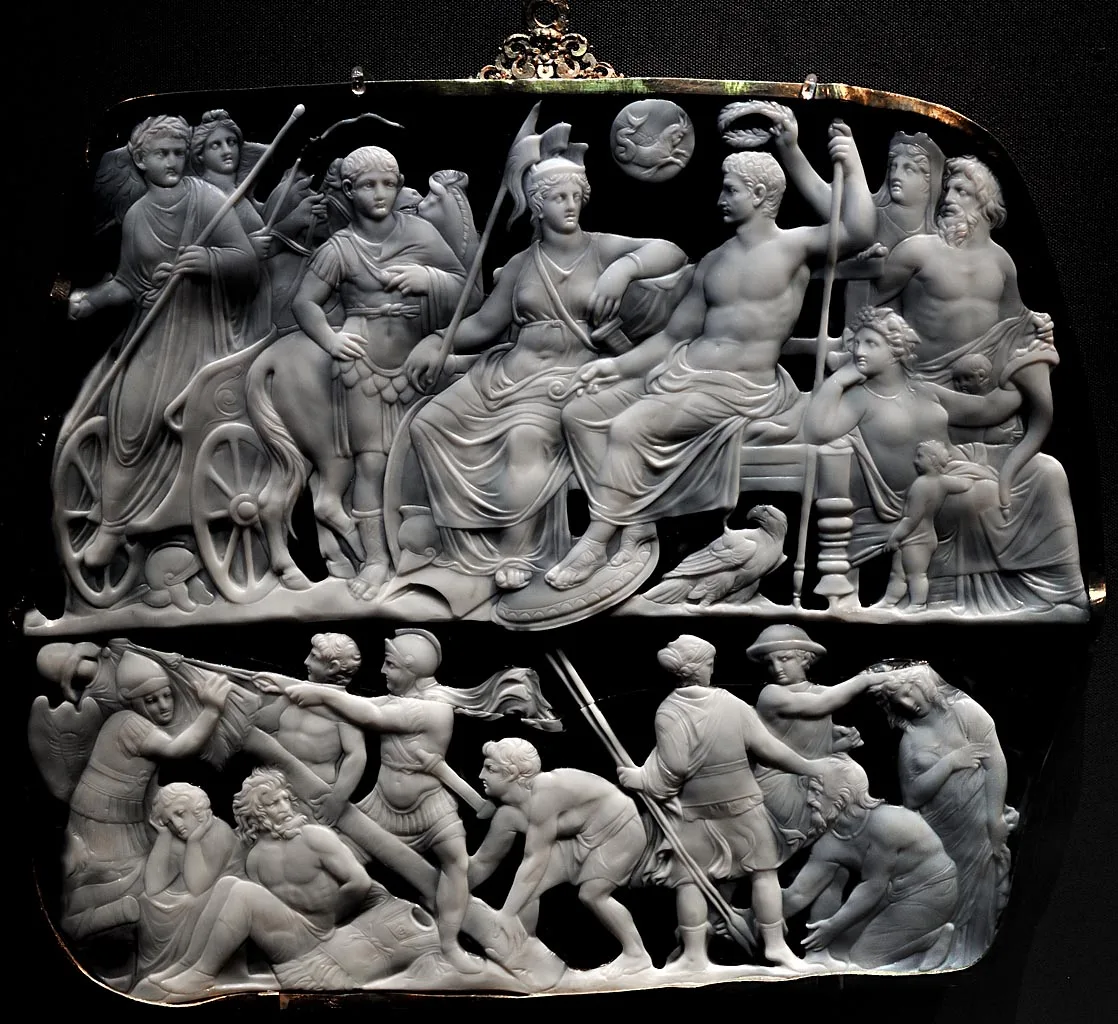
Small works of art, such as cameos carved from semi-precious stones, were one medium for Augustus’s political propaganda. The image shows the Gemma Augustea, on which Augustus appears half-naked, like a hero, with Capricorn between him and Dea Roma, the goddess of Rome. Augustus’s successors, including Tiberius, Vespasian and his sons, also occasionally employed Capricorn and its symbolism, particularly when an association with Augustus was politically useful as an affirmation of their legitimacy.
There is a story that, when Caesar’s comet appeared in 44 BC, a haruspex announced that it marked the end of a saeculum, then collapsed and died. According to an ancient Etruscan belief, every people or civilisation was allotted a fixed number of saecula, or units of time. The Etruscans, from whom the haruspices descended, had been allotted ten. Indeed, during the tenth saeculum, which began with the comet’s appearance, the Etruscan language was forgotten: the last emperor able to read Etruscan was Claudius, who ruled from AD 41 to 54. In times of political crisis and upheaval, such as those that prevailed in Rome towards the end of the first century BC, the Romans feared that their city, having been allotted a finite span of existence, might soon come to an end. Perhaps not only Rome, but the entire cosmos would perish, given the ideas of the Platonic Great Year and the Stoic universal conflagration that were widely accepted at the time, and which we explored in an earlier article. With Augustus’s accession and his long, peaceful reign, it seemed that a new age really had begun, a new golden age, and that Rome would endure for ever: Roma aeterna.
The names of Augustus and Caesar may not endure quite “for ever”, but they live on not only in history books but in everyday speech: for 2,000 years, we have named months of the year after them. The Senate named July after Caesar, deriving the name from his family, the Julii, while August was named after Octavian Augustus. The Senate bestowed the title “augustus” upon Octavian in 27 BC. This word, already archaic at the time, denoted something divine or sacred. Only after Augustus’s reign did the title Augustus officially come to signify imperial authority, and later emperors therefore used it too. The Senate was grateful to Caesar for initiating the calendar reform, which had by then become urgently necessary. The reason July and August both have thirty-one days, despite being consecutive months, is that the Senate did not wish Augustus to appear “lesser” than Caesar. The extra day for August was “stolen” from February. May was also known for a time as “Claudius”, and April as “Neronius”, but these changes did not outlive the emperors concerned.
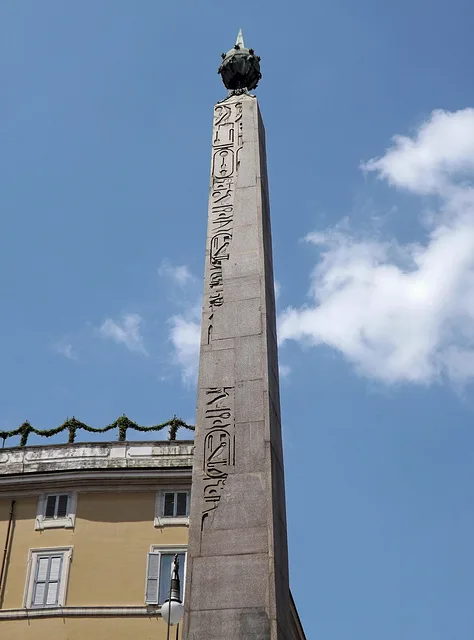
Egyptian obelisks had always been solar symbols. When Augustus brought them to Rome after his victory over Egypt, they were rededicated to the Roman solar deity. One of the obelisks he brought from Heliopolis, the City of the Sun, now stands outside the Italian Parliament building. It also served as a gnomon. Augustus readily identified himself with the solar Apollo, and Pliny tells us that the instrument was used to mark the winter solstice: the sign of Capricorn, symbol of Augustus’s reign and the new age.
The cult of the Sun had existed in Rome since ancient times, but two emperors raised it to a new level. The young Elagabalus came to the throne in 218 as a teenager and lasted only four years, until his grandmother, who had placed him there, had him killed and installed his cousin as emperor instead. The reason was the young emperor’s behaviour, which was anything but prudent and restrained. Elagabalus, or Heliogabalus—known during his lifetime as Marcus Aurelius Antoninus Augustus—was the hereditary priest of the solar deity Elagabal at the temple in Emesa, Syria. When he came to Rome, he brought his deity with him. But the solar vices of arrogance and vainglory went to his head, and he made enemies before he had even set foot in the capital, sending the Senate a portrait of himself in eastern priestly robes with orders that it be displayed in the Senate House. He made Elagabal, the god he served as high priest, the chief deity of the pantheon: at public ceremonies, Jupiter was no longer invoked first, but this foreign solar god. The emperor further offended Roman values and sensibilities by marrying a Vestal Virgin—a virgin priestess charged with tending the sacred hearth—with the intention of producing a divine heir. He even ritually “married” his god Elagabal to the Carthaginian goddess Tanit, or Caelestis. The young emperor was not hostile to other deities; on the contrary, he had been initiated into the mysteries of the Great Mother, Cybele. Yet he wished to subordinate all other gods to Elagabal, bringing every foreign cult, its mysteries and its deities under the aegis of his own solar god. He brought the idol, the Black Stone of Emesa, to Rome, and the deity’s full name was Sol Invictus Elagabalus. After the emperor’s downfall, the stone was returned to Emesa, since the cult as a whole had been largely identified with the emperor himself and did not survive in Rome without him. Elagabalus’s successor, Severus Alexander, restored Jupiter to his rightful place in the Roman pantheon. Upon its rededication, the temple was renamed the temple of Jupiter Ultor, Jupiter the Avenger. Since the cult of Elagabal was virtually identified with the emperor who served as its high priest, here we encounter a rather different form of “worshipping the emperor as a deity” from those considered earlier.
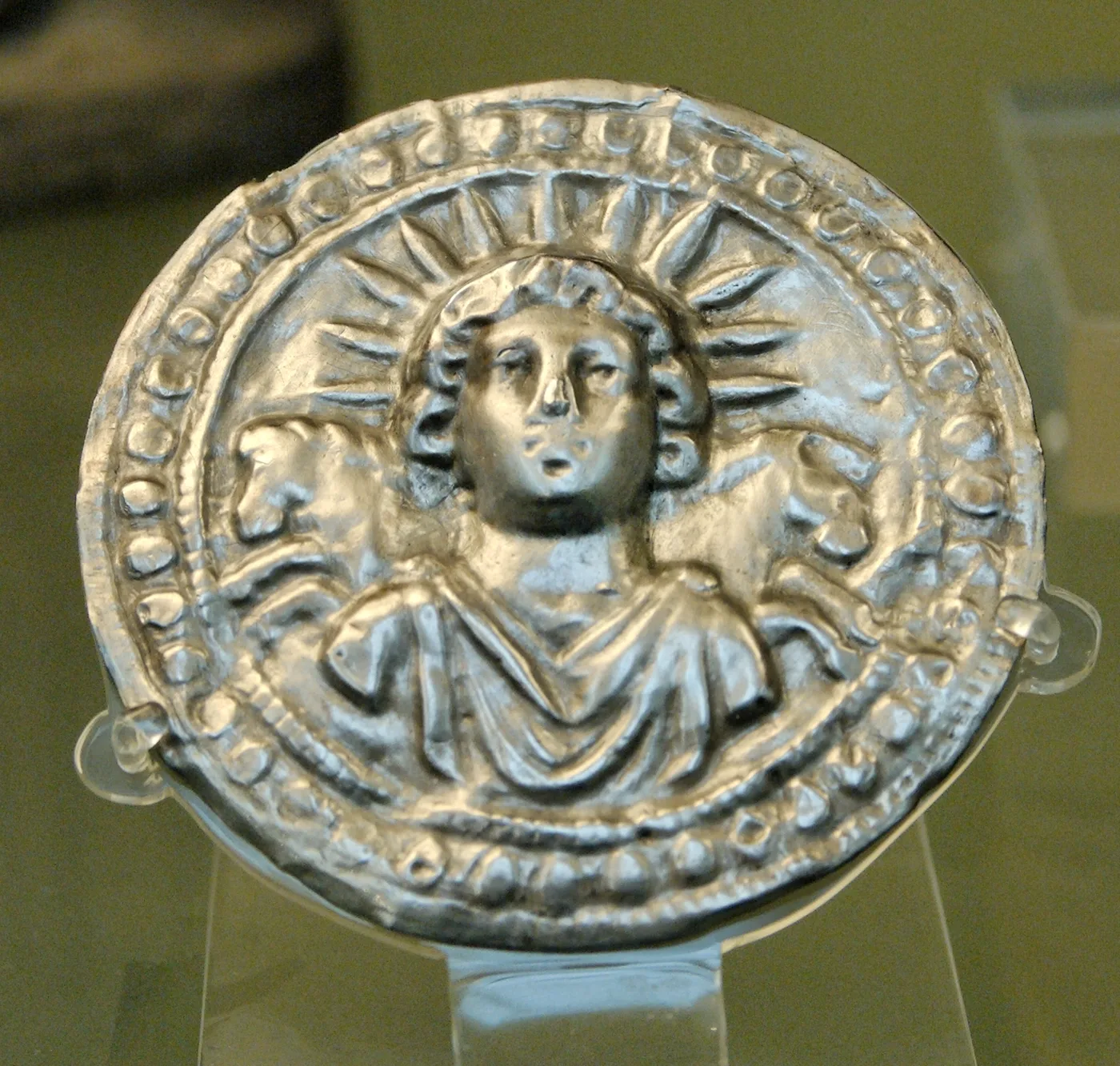
A solar deity once again stood at the head of the pantheon under Aurelian. In 274, Emperor Aurelian dedicated a temple to the Sun, Sol Invictus, while his coins bore the title Dominus Imperii Romani—Lord of the Roman Empire—beside the deity’s image. Aurelian’s mother had been a priestess of the Sun god in Pannonia, and the emperor is thought to have worshipped the Sun because the deity had helped him in his war against Queen Zenobia. Yet Aurelian’s Sol Invictus lacked the strongly eastern character of the Sol worshipped in Elagabalus’s cult. It was rooted instead in Roman tradition, making it far more acceptable to the people. Some of Aurelian’s predecessors, including Commodus, Hadrian and Septimius Severus, had also worshipped the Syrian Sol Invictus. Commodus depicted him on coins and added invictus to his imperial title, while Septimius placed the words “invicto imperatori” on his coinage. The cult of Sol Invictus was very popular in the army; surviving dedications identify Emperor Caracalla with Sol Invictus. Yet although the solar deity was the chosen god of certain emperors and widely worshipped by soldiers, Sol Invictus was not officially recognised until Aurelian. He established it both as an official military cult—meaning that the entire Roman army worshipped him wherever it was stationed—and as an official cult in Rome. Besides intending the cult to unite the Roman nation, Aurelian wanted it to have a more traditional, more Roman character than the earlier Syrian solar cults. He therefore founded a college of priests called pontifices, like the pontiffs of old, and the cult’s official name was Deus Sol Invictus. This solar cult was not as closely tied to Aurelian personally as Elagabalus’s had been to him, and so it survived the emperor’s reign. Mithras, so closely associated with Sol, was the god of a mystery cult. For us, Mithraism is quite literally a mystery: we do not know exactly what took place within the cult, since its central teachings were revealed only after initiation, let alone the details of its wider religious practice. By contrast, the cult of Sol Invictus established by Aurelian was a public, official cult of the Roman state. Nevertheless, given the close association between Mithras and Sol, an initiate into the mysteries of Sol Invictus Mithras could consider himself a participant in the “official” cult of Sol, since Mithras protected the emperors and the emperor himself recognised Sol.
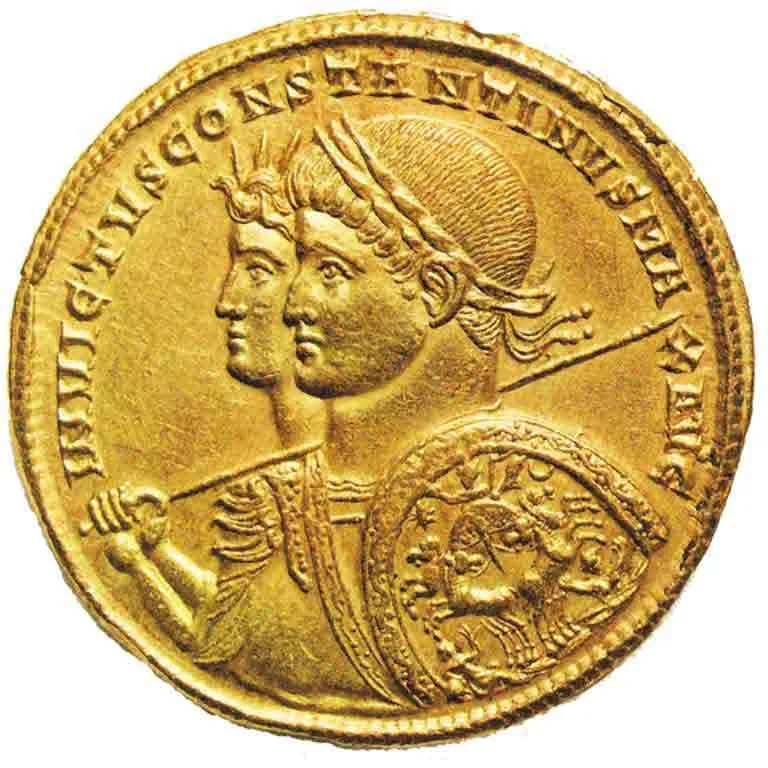
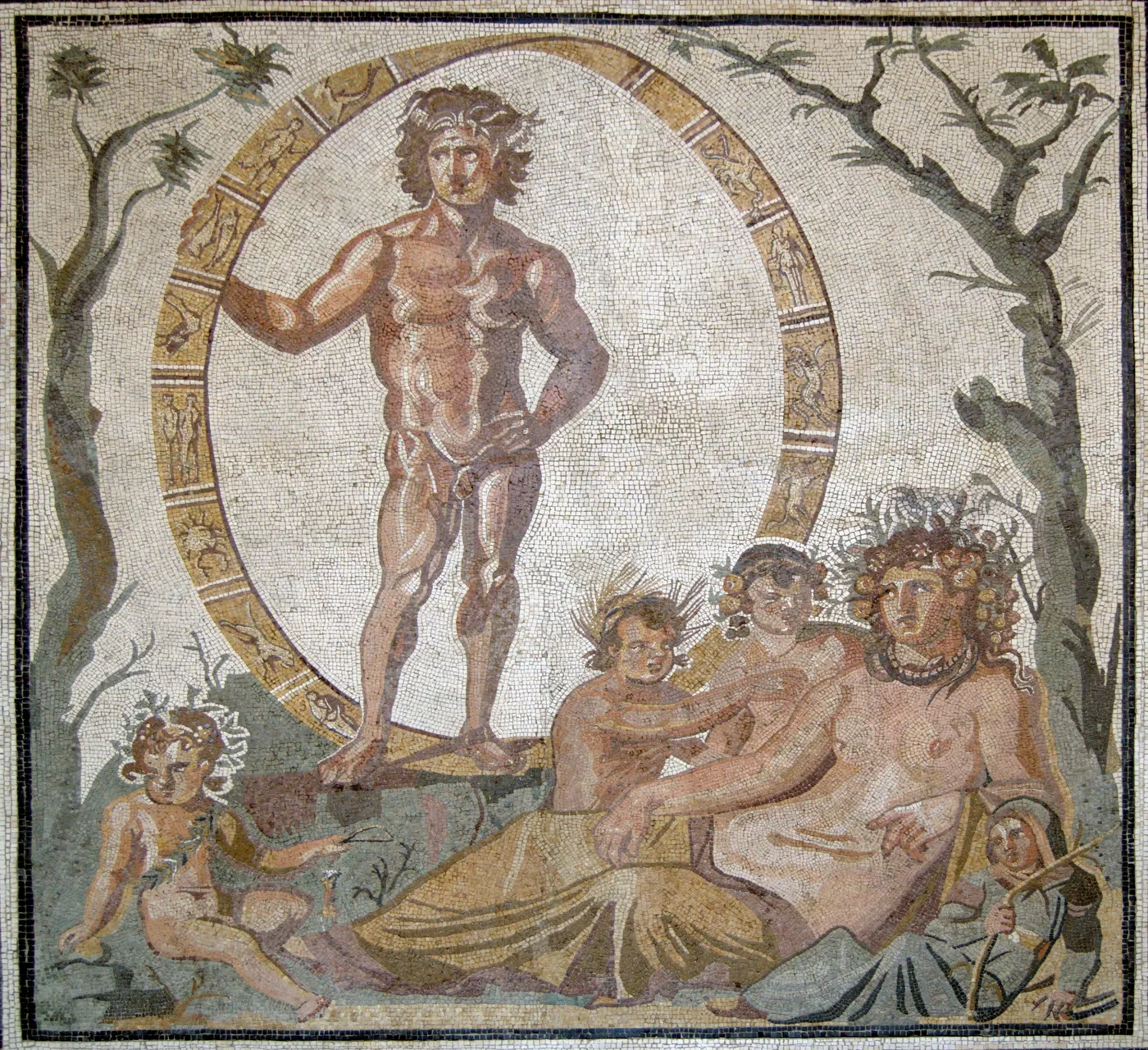
The last in this line of solar emperors is Constantine, either the last pagan emperor or the first Christian one, depending on how we interpret his decision to be baptised only on his deathbed. This was not unusual at the time, however, since baptism was believed to wash away all sins, making it safer to wait until the last moment. Constantine embraced the new deity, Christ, in the spirit of his age and his predecessors. Just as Aurelian believed that Heliogabalus had helped him against Zenobia, and subsequently built a temple to Sol, so Constantine accepted Christ after he had helped him in the battle against Maxentius. “Pagan” elements continued to exist alongside Christianity for a long time. The Arch of Constantine depicts military standard-bearers carrying statues of Sol Invictus, while Constantine himself was portrayed as Helios. Constantine’s successor, Constans, changed the date of Christmas from 6 January to 25 December, thereby moving Christ’s nativity to the “birthday” of Sol Invictus. Before that, however, when Jesus was still considered a Virgo, 6 January had been the birthday of Aion. This deity of time, mentioned in the previous article, appeared in the worship of Mithras, and we see him surrounded by the zodiac in the cover image.
In the next instalment, we shall look at how Roman rulers made use of astrology in practice, and at their relationships with astrologers.
This article was originally published on the Art of Astrology blog link