The future emperor Hadrian (reigned 117–138) had already had his horoscope cast by his uncle, who predicted that he would attain imperial power. Yet his life was not endangered by this, thanks to the reigning emperor Vespasian’s conviction that only his own sons could succeed him. Hadrian’s horoscope has come down to us through the second-century astrologer Antigonus of Nicaea and Hephaestion of Thebes, who quoted Antigonus’s historical horoscopes in his own work. The planetary positions given by Antigonus do not correspond exactly to those obtained through modern calculations using the tropical zodiac: by our reckoning, Hadrian’s Saturn lies at the very end of Sagittarius, placing it not only in the preceding sign but also in the preceding house, according to the whole-sign house system used at the time. The Ascendant degree, too, is still at the end of Capricorn rather than in Aquarius, making Capricorn the first house. I have modified the image to bring it closer to Antigonus’s text.
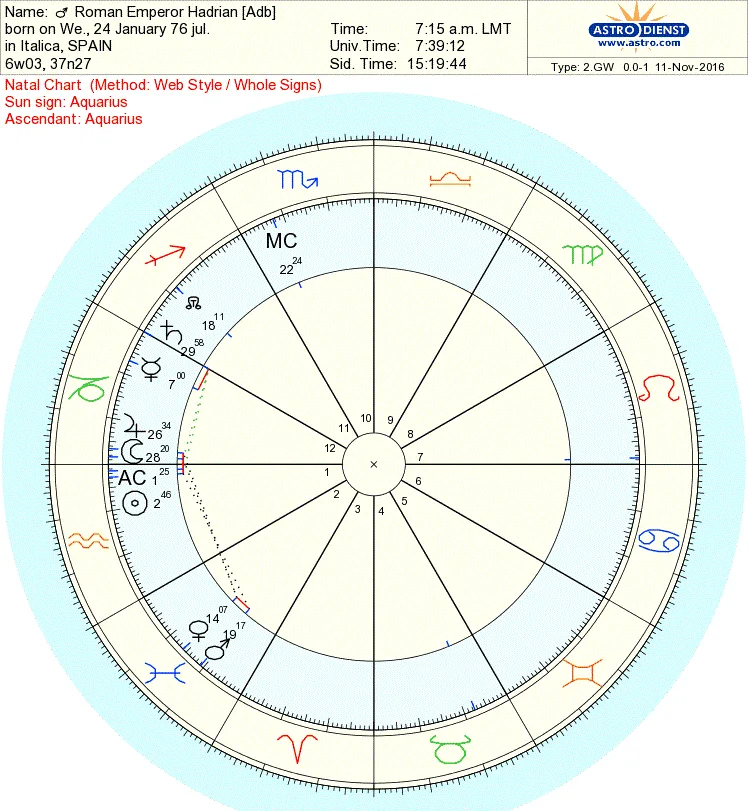
Antigonus states that this “unnamed emperor” became emperor “because both luminaries are on the Ascendant, the Moon in its own sect, on the very degree of the Ascendant and conjunct Jupiter”… “because his spear-bearers are in their own houses: Venus, for example, is in her exaltation in Pisces, while Mars is there in his own triplicity” (spear-bearers are the planets following the Moon and preceding the Sun, whose condition determines a person’s financial and political standing).
.. “He was great, courageous and pleasant in character because the luminaries were on the angles, especially the Ascendant, in a human and masculine sign” (Aquarius). “And he was intelligent, profound and well educated because Mercury was a morning star, with Saturn in the twelfth sign and serving as the Sun’s spear-bearer.”
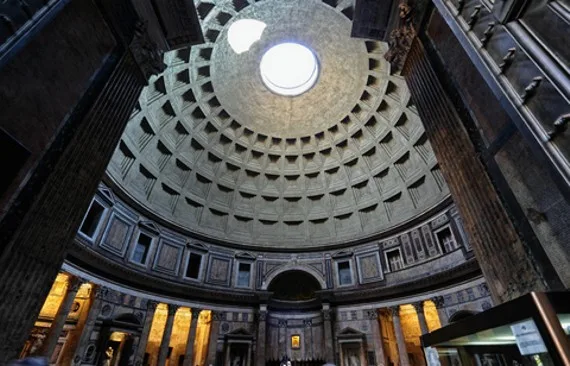
From Antigonus’s perspective, Hadrian’s Mercury certainly benefited from the influence of its ruler Saturn, placed in its own domicile of Capricorn. Yet even from a modern perspective, Saturn’s position in the final—and most emphatic—degree of Sagittarius makes perfect sense: Hadrian founded (Saturn) and built the Roman university (Sagittarius), the Athenaeum. And whichever of the Saturn-ruled signs contained his Ascendant degree, the emperor is renowned for the walls (Saturn) with which he enclosed the Empire’s frontiers in distant Britain. The contemporary perception of Britain as a distant, unknown and fearsome land accords with the symbolism of the twelfth house, where Hadrian’s Saturn falls. Alongside these themes of faraway lands and higher learning, Sagittarius, as the home of his Ascendant ruler, also brought Hadrian prominence in religion: the emperor rebuilt the Pantheon, the temple of all the gods originally built under Augustus.
Like the emperor Tiberius, Hadrian mastered the art of astrology, and every year, on 1 January, he would draw up a list of the most important events awaiting him. In this way, he even predicted the hour of his own death.
Hadrian’s successors, Antoninus Pius—so named because he “piously” deified his predecessor and adoptive father, Hadrian—and Marcus Aurelius are less interesting to us from an astrological perspective. As philosophers and Stoics, they paid little attention to persecuting those who possessed imperial horoscopes.
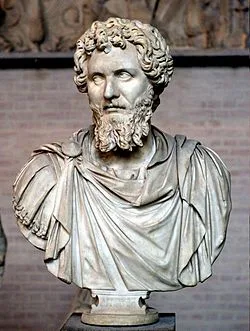
Septimius Severus (reigned 193–211), however, is another story altogether. A native of Syria, he had enquired into the potential of his nativity long before, and had also sought information through other forms of divination. Under the “good emperor” Marcus Aurelius, this posed no problem, but during the reign of his hated son Commodus—whom we remember from the film Gladiator—the future emperor Septimius Severus was brought to trial. Fortunately for him, Commodus had by then become so unpopular that the praetorian prefects acquitted Severus and crucified his accuser.
The ambitious Septimius also decided to enlist astrology in finding a future wife. When he learnt that the nativity of a Syrian noblewoman foretold that she would marry a king, he asked for her hand. The lady whose natal promise was fulfilled through Septimius’s career—or perhaps the other way round—was Julia Domna, daughter of the high priest of the god Elagabalus. (We encountered Julia’s sister in a previous article, when, following the deaths of the empress’s sons by Septimius, Caracalla and Geta, she placed her grandson, the young Elagabalus, on the throne, followed by his kinsman Alexander Severus.) Septimius had frescoes depicting his natal chart painted on the ceilings of the imperial chambers from which he governed. The portion of the heavens showing the Ascendant degree, however, differed from one chamber to another. Since his Ascendant was not publicly known, it was impossible to calculate the details of his fate, including the time of his death.
Even if Septimius was not as skilled as Tiberius and Hadrian, he knew enough astrology to discuss his son Geta’s nativity with a friend. He confided that it “seems strange to me that our Geta is destined to become a deified emperor, for I see nothing imperial in his horoscope!” Septimius naturally hoped that his elder and younger sons would reign peacefully together after him. Yet Geta was soon murdered by his younger brother Caracalla, evidently the true heir to his father’s “imperial horoscope”, who thereby seized all power for himself. Septimius executed many people who consulted soothsayers and astrologers about the length of his reign, while his son Caracalla (211–217) met an ironic end: he ordered an investigation into who possessed an “imperial horoscope”, with instructions that the person should then be killed. When a letter arrived for the emperor identifying the man on the “blacklist”, chance delivered it into the hands of the very person whose imperial horoscope had marked him for death: Macrinus. Macrinus, however, decided to take fate into his own hands through a swiftly organised conspiracy and coup.
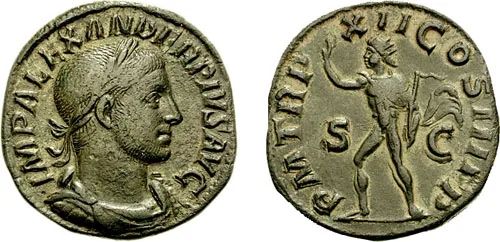
Alexander Severus (222–235), the nephew and successor of Elagabalus, was another astrologer among the emperors—and a highly accomplished one (matheseos peritus)—as well as a patron of astrologers and other diviners. During his reign, astrologers were recognised as an official association of diviners, and may also have enjoyed privileges similar to those granted to teachers of the liberal arts. Alexander reorganised Hadrian’s university, the Athenaeum; increased imperial patronage of the traditional disciplines of rhetoric, grammar and medicine; added a technological institute; and introduced and supported the divinatory disciplines within the Athenaeum. He provided both haruspices and astrologers (mathematicis) with lecture rooms and salaries, as well as support for their less affluent students, and appointed professors of astrology to their own chairs, which may have existed since Hadrian’s time. Astrology was certainly established in the universities under Alexander, something that would not happen again in Europe until the late Middle Ages, within faculties of medicine.
The astrologer Thrasybulus predicted that Alexander would “fall by the sword of a barbarian”. Yet, in the spirit of a Delphic oracle rather than the “rational precision” in which Roman astrology took such pride, the emperor ultimately died not in battle against barbarians—a prospect he had welcomed—but at the hands of one of his own guards, a man of barbarian origin.
In the fourth century, Christianity came to the fore, bringing with it laws against astrology. Although restrictions on the subjects that could be investigated through astrology had been in force since the beginning of the Empire, expulsions of astrologers and bans on the practice of astrology itself had been merely occasional and temporary measures affecting Rome and Italy. Only under Diocletian was the prohibition extended throughout the Empire, and even then only for his lifetime. Nevertheless, this prohibition, issued in Diocletian’s edict of 296, was preserved in the Code of Justinian: the learning and practice of the geometrical art is in the public interest. But the mathematical art (astrology) is punishable and absolutely forbidden. Diocletian’s motive for banning astrology was entirely political, as such motives had been before his time, whereas the prohibitions imposed by later Christian emperors had a religious basis. Fourth-century laws preserved in the Theodosian Code equated astrology with magic for the first time and prohibited both outright. (Under Roman law, black magic had always been strictly forbidden, but it had also been clearly distinguished from methods of divination.) Thus, in the fourth century, any private act of magic or divination could incur the death penalty, as well as a charge of treason. Public practices of haruspicy and augury—once inseparable from Roman “politics”—were soon prohibited, and prophets and interpreters of dreams were condemned.
Yet astrology survived even this dark age, and would reappear on the European political stage during the Renaissance, when astrologers would once again attend the courts of emperors and kings—including “our own”.